



Cryogenic Systems And Accessories
The Cryogenic Systems And Accessories Manufacturer!
Dexing Magnet is a large enterprise with excellent quality and perfect service in the international magnetometer and machinery industry.


Why choose us
Professional Team
It has a group of experienced technicians and managers in the magnetometer and magnetic industries.
Our Product
Vibrating Sample Magnetometer, Hall Effect System, Gauss Meter, Flux Meter, Electromagnets, Helmholtz Coils, Magnetizers, Magnetic Material Property Testing Systems
Production Market
At present, the Dexinmag company has established cooperative relations with many schools and institutions at home and abroad for more than 30 years, such as Singapore Polytechnic University, Caltech, University of Hong Kong, etc.
Customized service
Equipment quality Reliable, electrical components and hydraulic transmission components are imported from Japan's Mitsubishi and Italy, and can provide qualified products and good after-sales service.
Our company provides the following products
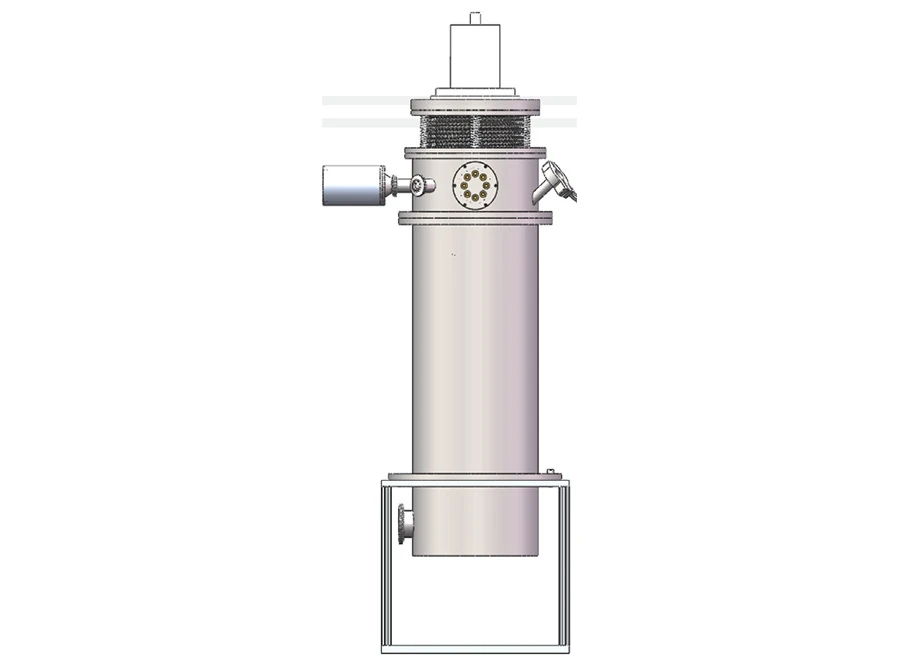
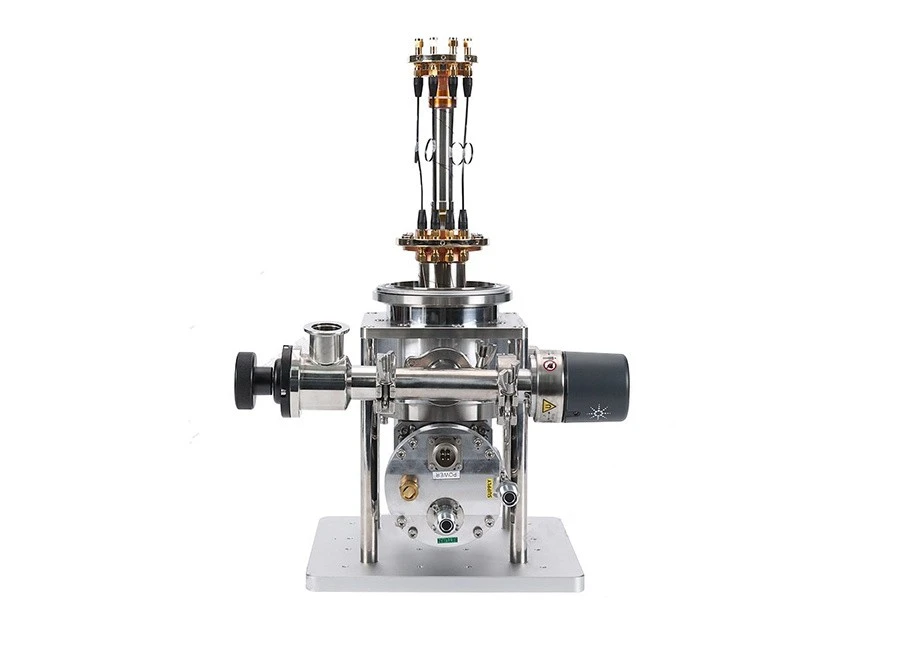
Temperature range: 300mK-4.2K
Low Temperature Cooling: 50μW@300mK; 100μW@850mK; 0.1W-1.2W@4.2K
RF interface: SMA
Number of interfaces: 4-32
DC interface: On request
Number of interfaces: Configured on request
Types of Cryostats
Single Compressor Cryostat
A single compressor cryostat controls both the freezing plate and the cooling chamber using a unified system. This type is ideal for basic cryosectioning tasks where independent control of the freezing plate and chamber temperature isn’t required. The compressor maintains the necessary low temperatures throughout the chamber, ensuring consistent freezing, but the integrated system may limit flexibility in temperature adjustments.
Double Compressor Cryostat
Double compressor cryostats provide more precise control by using two separate compressors—one for the freezing plate and one for the cooling chamber. This allows for rapid freezing and more accurate temperature regulation, making it suitable for delicate tissues and frozen sections that require careful handling. The double compressor system is often preferred for advanced cryosectioning tasks due to its ability to maintain lower temperatures over longer periods.
Rotary Cryostat
Rotary cryostats are manually operated and feature a handwheel that allows the user to control the sectioning process. These are commonly used in situations where fine manual control is required for tissue sectioning. By turning the handwheel, the tissue sample is advanced toward the blade, allowing for precise slices. While rotary cryostats require more effort, they offer greater control over the sectioning process.
Motorized Cryostat
Motorized cryostats automate the sectioning process, which can help reduce user fatigue and improve consistency. With adjustable cutting speeds, motorized models allow for greater efficiency, particularly when handling harder or more delicate tissue samples. The motorized function ensures consistent sectioning and is ideal for labs handling high volumes of tissue samples.
Medical Applications: In pathology labs, cryostats are used to quickly freeze tissue samples for examination. These rapid freezing preserves cellular structures, making it easier to diagnose diseases such as cancer through histological analysis.
Research: In scientific research, cryostats are utilized to study materials at low temperatures. They are essential in fields like molecular biology and materials science, where understanding the properties of substances at cryogenic temperatures can lead to significant breakthroughs.
PLow Temperature Sensors
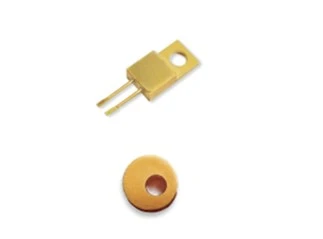
The DT-Series Silicon Diode Temperature Sensors introduced by FUTURE QUANTUM use a special silicon diode chip, which has more stable low temperature operating characteristics than previous silicon diodes in the market.
|
Standard Curve |
DT-Series, see Figure 1 |
|
Recommended excitation |
10 µA±0.01 µA |
|
Maximum Reverse Voltage |
70V |
|
Maximum current for damage |
1 mA continuous or 100 mA pulsed |
|
Power consumption at 10 µA excitation |
10 μW@4.2 K; 10μW@77 K;5μW@300 K |
|
SD Package Response Time |
10 ms@4.2 K;100 ms@77 K;200 ms@305 K |
|
Repeatability |
±15 mK@77 K |
|
Magnetic field effects |
Recommended for use in magnetic fields at low temperatures of 50 K only, thermometer mounting surface |
|
Radiation effects |
Recommended for use in low levels of radiation only |
Types of temperature sensors
Contact Type Temperature Sensors: There are a few temperature meters that measure the degree of hotness or coolness in an object by being in direct contact with it. Such temperature sensors fall under the category of contact type. They can be used to detect solids, liquids, or gases over a wide range of temperatures.
Non-Contact Type Temperature Sensors: These types of temperature meters are not in direct contact with the object rather, they measure the degree of hotness or coolness through the radiation emitted by the heat source.
Use of Temperature Sensor
Domestic equipment: Temperature sensors are used in thermometers, refrigerators, water heaters, air-conditioners, and other household appliances to monitor and control temperature.
Industrial processes: Temperature sensors are used in industrial processes to monitor and control temperature in manufacturing, chemical processing, food processing, and other industries.
Building and structure monitoring: Temperature sensors are used to monitor the temperature of structures, buildings, and infrastructure to ensure safety and structural integrity.
Environmental monitoring: Temperature sensors are used in environmental monitoring systems to measure the temperature of soil, water bodies, and air to study climate change, weather patterns, and ecological systems.
Medical applications: Temperature sensors are used in medical devices such as thermometers, incubators, and patient monitoring systems to measure body temperature and ensure proper medical care.
Research and development: Temperature sensors are used in scientific research and development to study thermal properties, conduct experiments, and gather data for analysis.
Deliver, Shipping And Serving
Delivery Time
We promise to complete production and shipment within 7 working days after receiving the order.
Transportation
Professional packaging and safe transportation methods are used to ensure the safety of the equipment during transportation.
After-sales service
We provide comprehensive after-sales service, including equipment installation guidance, operation training, maintenance and so on. Meanwhile, we have a 24-hour customer service hotline to answer your questions at any time.


FAQ
As one of the leading cryogenic systems and accessories manufacturers and suppliers in China, we warmly welcome you to buy customized cryogenic systems and accessories from our factory. All equipment are with high quality and competitive price.
Vibrating Sample Magnetometer, High Temperature Superconducting Magnet, Clamp Laboratory Electromagnet