



Magnetic Field Mapper
Xiamen Dexing Magnet Tech. Co., Ltd.
Dexing Magnet is a large enterprise with excellent quality and perfect service in the international magnetometer and machinery industry.
Why Choose Us
Professional Team
It has a group of experienced technicians and managers in the magnetometer and magnetic industries.
Excellent Quality
It has introduced advanced technologies from Japan and Europe, cooperated with domestic universities and scientific research institutes, and can produce complete sets of magnetoelectric equipment.
Good service
We offer a comprehensive customization solution, tailored to meet the specific needs and requirements of our clients.
One-stop Solution
Providing technical support, troubleshooting, and maintenance services.


What is Magnetic Field Mapper?
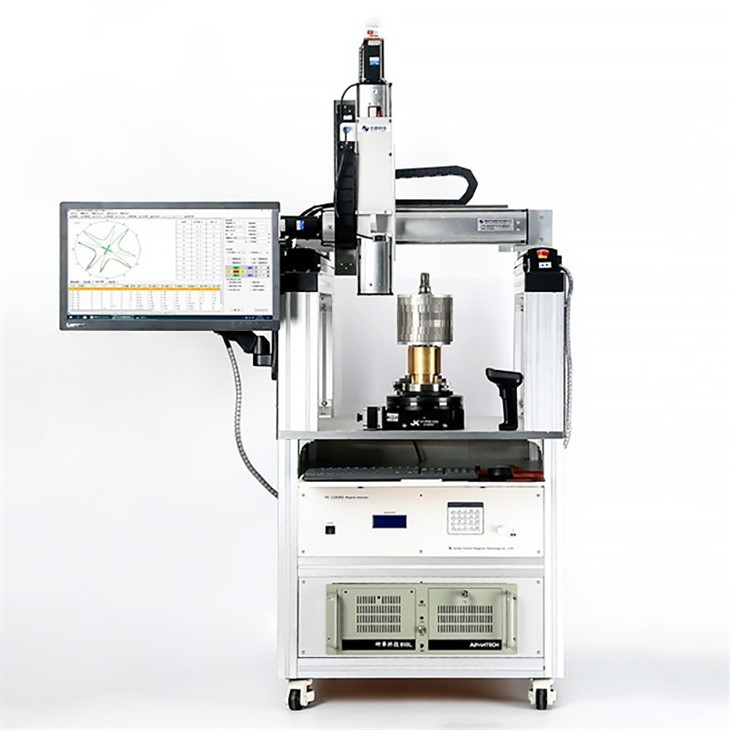
The Magnetic Field Mapper (MFM) is a robotic sensor that uses a triple-axis magnetometer to map out large areas for magnetic field distribution.
It can test the three-dimensional magnetic field distribution of AC and DC magnetic fields in any shape space with high precision, the three-dimensional distribution of magnetic structures on the surface of various shapes, uniform distribution, multi-pole magnetic ring, N/S magnetic pole distribution, motor magnetic field, superconducting magnetic field, magnetic resonance imaging magnetic field and many other magnetic field characteristics tests; It is then drawn into various graphics, stored data and saved for printing.
It is suitable for all kinds of AC and DC magnetic field magnetic research and has been widely used by many domestic and foreign aerospace military and scientific research units.
● Wide range of measurement: Space measurement range is 200mm x 200mm x 200mm (X, Y, Z)(it can be customized, please advise if there's a special requirement), free tour optional three directions, and will reach 5Axis platform when rational platform attached to it. The translation is meticulous(Resolution ratio: 0.00039mm), Positional accuracy 0.01mm, Repeat positional accuracy<0.005mm, Rotation travel angle resolution ratio <0.0002°, positional accuracy 0.01, Repeat positional accuracy <0.005°, Velocity of movement can be divided into 2-64 classes. Fine distribution of measure space on the physical space.
● High accuracy of system measurement: Using high-precision digital Gauss meter (one-dimensional or multi-dimensional) equipped with micro Hall probes (one dimensional ɸ0.5mm, two-dimensional ɸ1.2mm, three-dimensional ɸ1.2mm)make space and surface magnetic measurement up to higher accuracy. (One-dimensional precision can be up to ± 0.05% of the reading, range±0.005. Three-dimensional precision can be up to ± 0.10% of reading, range ± 0.005 )
● Automation and Digitization: The real-time control and data acquisition controlled by computer, system software design measure processes that can be divided into many forms, user can directly enter data parameters of the measured object for fully automated measurement, and data is automatically recorded and saved, based on test data system can generate one dimensional, two-dimensional, three-dimensional graphics and measurement data logging, database format is Access and print the chart.
● Flexible combinations: Three-dimensional translation platform and rotation platform can be assembled in many suitable situations for various measurement methods to meet the needs of the different measurements, system software covers control and data acquisition, and software function can also be extended as required, realizing full automation of unmanned monitoring measurement.
● Gauss meter tested by National Institute of Metrology China; System software registered and approved by CPCC(Copyright Protection Center of China)

Three Common Magnetic Field Measurement Systems
The demand for magnets has been increasing in several industries, such as sensor systems, actuator manufacturing, renewable energy sources, electronics, and medical devices. Especially in the electric motor industry, as one of the largest end consumers of permanent magnets, it plays a central role in positively impacting their demand due to urbanization, industrialization, clean transport, and the increasing demand for automation. Moreover, the expansion of wind power plants due to the growing population, climate change challenges, and increasing electricity demand is anticipated to drive market growth in the coming years.
Over one-third of the permanent magnet's production outputs have been used to manufacture various permanent magnet motors. The advantages include copper saving, power saving, weight reduction, small size, and high specific power. However, the design complexity and production tolerances are increasing to guarantee these motors' optimal operation and performance under all conditions. This means that magnetic field measurement equipment is necessary to measure and analyze the magnets' quality individually and within the end products. At present, several measurement systems can measure the magnetic field of magnets. These vary from a simple Gauss meter to an advanced multi-Hall sensor scanning system:
Gauss meter
A Gauss meter is a hand-held electronic device with a Hall sensor probe that measures the field strength perpendicular to the probe. On the probe's tip, a Hall sensor measures the voltage induced by the magnetic field, which is proportional to the magnetic flux density. The meter's display will show the Gauss field value. Depending on the measurement types, there are different probes, such as axial or transverse probes.
When measuring the magnetic field of a magnet with a Gauss meter, several factors affect the measurement result, such as the probe's orientation relative to the magnet and the distance to the magnet. High-accuracy positioning is thus required to get good results. This is particularly difficult for magnets with an inhomogeneous magnetic field distribution, such as multipole magnets, since small position changes can significantly influence the measured magnetic field.
Flux meter
A flux meter (Helmholtz coil meter) is designed to measure the amount of magnetic flux generated from a magnetic surface of a permanent magnet. It's used in physics labs to test the properties of materials. With a flux meter, a permanent magnet can be characterized by simply passing through the center of a Helmholtz coil with an open center volume based on a physical relationship between the number of windings of the coils and the variation of magnetic flux across the coils.
A flux meter is more challenging to use and more complex than a Gauss meter.
A Gauss meter and flux meter are suitable devices for measuring a few basic properties of a magnet, such as the magnetic field peak value and the magnetic flux. However, with hand-held instruments, the results can be somewhat inaccurate. The software with these instruments is rather basic. These measurement systems cannot answer all the complex questions about magnetic issues related to individual magnets, such as inhomogeneities, North/South asymmetries, and magnetic problems inherent to rotor assemblies of magnets, such as the NVH issues (the noise, vibration, and harshness issues).
Advanced magnetic field scanner
Advanced magnetic field scanner (Combi Scanner), a 4-axis motorized scan stage, is designed to measure the magnetic field distributions of permanent magnets in different types, shapes, and sizes. From individual magnets and magnet assemblies to permanent magnet rotors (radial and axial). The Combi Scanner can map 3D magnetic fields with high accuracy and spatial resolution thanks to a built-in magnetic field camera. It features an advanced on-chip 2D array of Hall sensors with more than 16000 measurement points.
Magnetic induction intensity
Magnetic induction intensity is a physical quantity used to describe the properties of the magnetic field, expressed by B, the direction of B at a point in the magnetic field is the direction of the magnetic field at the point, and the size of B indicates the strength of the magnetic field at the point.
In the SI system of units (International System of Units), the unit of magnetic induction strength is [volts · second/meter 2], and [volts]·[second] is called Weber, so the unit of magnetic induction strength is called [Weber/meter 2] or [Tesla], referred to as [T], in the CGSM system of units, the unit of magnetic induction strength is [Gauss]. The units are denoted by symbols: V is [volts], s is [seconds], m is [meters], Wb is [Weber], T is [T], Gs is [Gauss], mT is [millite].
1T = 1Wb/m2=104Gs=103mT (1)
Magnetic line of force, magnetic flux and magnetic flux continuity theorem
Magnetic field is depicted graphically with magnetic field lines. The magnetic field lines of various magnetic fields generated by current are shown in Figure 1. Magnetic field lines are headless and tailless closed lines surrounding the current, and the direction of current and the direction of return of magnetic field line conform to the right-hand rule.
We specify that the tangent direction of any point of the magnetic field line is the direction of the magnetic field (i.e., B) at that point, and that the number of magnetic field lines per unit area perpendicular to the B vector is equal to the magnitude of the B vector at that point. In other words, where the magnetic field is strong, the magnetic field line is denser, and where the magnetic field is weak, the magnetic field line is thinner.
The total number of lines of magnetic force passing through a surface is called the magnetic flux passing through the surface and is represented by Φ. The calculation of magnetic flux is shown in Figure 2. The area element is taken on the surface, and a θ Angle is formed between the direction of its normal line and the direction of B of the point. The magnetic flux of the element passing through the area is: dφ=B×cosθ×ds (2)
Magnetic field strength, permeability and ampere-loop law
Magnetic field strength is a physical quantity introduced to facilitate the analysis of the relationship between magnetic field and current, it is also a vector, expressed by H, its relationship with magnetic induction intensity is:
H = B/μ (7)
Where: μ is the permeability of the magnetic medium, determined by the nature of the magnetic medium
Agreed. In SI units, the permeability of a vacuum is:
μ0 = 4π×10-7 Henry/m (8)
The unit of H is [ampere/meter], in the CGSM system of units, the permeability of a vacuum is 1, and the unit of H is [Oster], short for [Ao]. The units are represented by symbols: A is [ampere], Oe is [O], and H is [Henry].
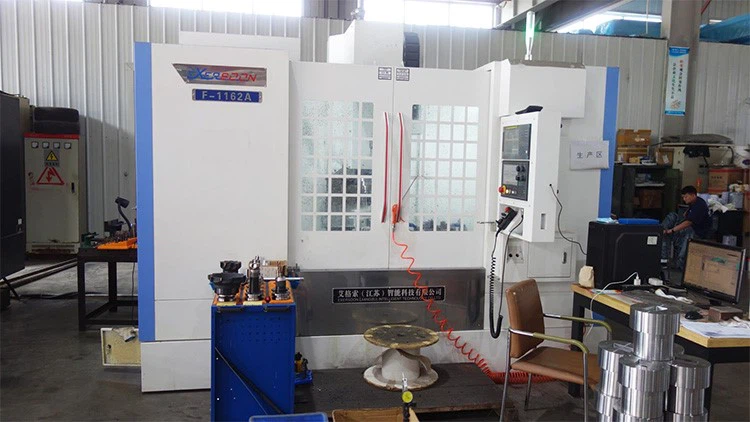
Our Factory
Dexing Magnet is located in the city of Xiamen, China which is a beautiful peninsula and an international seaport, with the factory in Jiangsu, Zhejiang China, was founded in 1985, the former identity is one military factory, researching and developing communication parts, this facility was later acquired by the Dexing Group in 1995.


FAQ
As one of the leading magnetic field mapper manufacturers and suppliers in China, we warmly welcome you to buy customized magnetic field mapper from our factory. All equipment are with high quality and competitive price.
Magnetic Door Gasket Seal, Portable Digital Gauss Meter, Hall Effect System