



Cryostat
Xiamen Dexing Magnet Tech. Co., Ltd.
Dexing Magnet is a large enterprise with excellent quality and perfect service in the international magnetometer and machinery industry.
Why Choose Us
Professional Team
It has a group of experienced technicians and managers in the magnetometer and magnetic industries.
Excellent Quality
It has introduced advanced technologies from Japan and Europe, cooperated with domestic universities and scientific research institutes, and can produce complete sets of magnetoelectric equipment.
Good service
We offer a comprehensive customization solution, tailored to meet the specific needs and requirements of our clients.
One-stop Solution
Providing technical support, troubleshooting, and maintenance services.


Cryostats are used to preserve frozen tissue samples, slice tissue sections thin enough for microscopic examination, and provide a quick diagnosis for a variety of diseases and medical conditions, including neuromuscular diseases. They can also be used to examine enzyme histochemistry. The entire process is performed under cryogenic temperatures.
Cryogenic temperature refers to a range of about -150℃ (-238℉) to absolute zero (-273℃ or -460℉.) This range is considered the temperature at which molecular motion comes as close as possible to stopping altogether. A cryostat maintains its temperature using a freezing chamber and cryogenic gas.
Cryostats use a number of refrigeration methods to achieve these low temperatures, including helium baths with liquid helium or liquid nitrogen. Other cryogenic fluids that may be used to cool a cryostat include argon, oxygen, and nitrogen.
How Do Cryostats Work?
A cryostat is made up of five parts that serve important functions for various experiments. These are the: freezing chamber or shelf, specimen holders, microtome, blade holder, and anti-roll guides.
Before tissues can be analyzed, they must first be prepped. Cryosectioning is best for tissues that melt, wrinkle, crack, tear, or otherwise deteriorate when you work with them. You must embed the tissue for sectioning, either in paraffin, optimal cutting temperature (OCT) compounds, or resin.
Before starting the cutting process, you can use OCT to practice to make sure your settings are correct. This way, you don't waste valuable samples while learning to operate the machine.
Freezing Shelf
The freezing shelf is a place to hold sample tissues that are stored and frozen before they are sectioned.
Freezing shelves are located near the compressor system, so they have an average working temperature -10℃ lower than the set cryostat chamber temperature. Newer cryostat units come with a Peltier freezing stage – a thermoelectric device that increases heat diffusion upon activation.
This means the unit has a higher cooling rate, which leads to a faster freezing process. Sample tissues should be small and thin, (3 to 4mm) to speed up the process and prevent ice crystals from forming.
Specimen Holders
Also called "chucks", specimen holders mount the frozen specimen on the cryostat microtome for sectioning.
Chucks are built with a crossing grid pattern of sharply cut channels to maximize gripping power to hold the samples.
In addition, chucks are made with stainless steel so as to be able to withstand the significant freezing power, and are available in numerous shapes and sizes to accommodate multiple requirements.
Microtome
The microtome is a sharp blade mounted inside the cryostat. It includes a mechanism that advances the tissue samples toward a fixed blade that sections them into microscopic pieces.
Older units come with a wheel on the outside of the chamber to manually adjust the microtomes, to help preserve the quality of the sample tissues to be sectioned. Newer units feature push-button electrical microtome controls.
The microtome allows for slicing adjustments to be made in micrometers – a unit of measurement that determines the cutting precision. It's also possible to find machines with vibratomes, which are similar to microtomes, but use vibrating blades to cut through the tissue samples.
Blade Holder
The blade holder is in front of the microtome. It is either fixed to the base of the microtome, or the cabinet. These clamp the cutting blade into position. Either disposable or reusable blades are used.
Disposable Blades
These blades are intended to be used for a certain amount of time before they have to be replaced.
Disposable blades have to be clamped with even pressure maintained across the entire length of the blade. If either the front or rear pressure plate sustains damage, it will change the climbing pressure which eventually negatively affects cryosectioning efficiency and quality.
The advantage is that disposable blades do not have to be resharpened, are suitable for all cryosections and applications, and are compatible with all of the common microtome systems so you don't have to purchase different blade units for various functions.
Reusable Steel Blades
The alternative is a reusable steel blade. This rests on a support bar that's between two pillars of a standard knife holder. Each pillar has a screw at the top to secure the blade and make sure it is clamped firmly.
These blades are made from either high-quality carbon or tool grade steel and are made with anti-corrosives. As such, they are less likely to rust and more likely to be free of impurities when compared to disposable blades. These blades do need to be sharpened on a regular basis for sectioning tissue samples.
Anti-Roll Guides
These are used to remove sections and to avoid curling or rolling sections that are being prepared. They are made of glass plates inside an aluminum frame. The frame creates a gap between the glass slides and the upper surface of the front pressure plate so the section can slide under. Gap sizes vary and can be adjusted according to the thickness of the section.
Cryostats without anti-roll guides use the cooled brush technique to collect and gather sections. A brush pulls the section onto the pressure plate, then down the blade's front surface as the section's leading-edge starts to get near the blade edge.

● It's convenient. The tissue does not need fixation, dehydration, clearing and embedding before sectioning.
● It's fast and time-saving.
● It doesn't induce great changes in the tissue.
● fats and lipids components can be well preserved.
● It can preserve the antibody activities and enzymes better, especially the surface antigens and water-soluble enzymes which are less heat resistant and less tolerant to organic solvents.
When deciding the type to purchase or lease, it's crucial to know what each offers so you can make the best choice for your needs. Your choice will depend heavily on the frozen tissue you'll be working with most often because the cutting temperature varies depending on the kind of frozen section you're working with.
Pricing varies widely depending on the type of cryostat, the refrigeration method used, the make, model, and more. To purchase outright, expect to spend thousands of dollars on each unit, or consider leasing a cryostat machine to help you maximize your budget.
Single Compressor
Single compressor models can control both the temperature within the freezing plate and the cooling chamber. This process typically involves an evaporator system, which allows the cooling chamber and freezing plate to reach cryogenic temperatures.
With this configuration, you cannot control the temperature of the freezing plate separately because it is integrated with the cooling chamber's refrigeration system.
Double Compressor
With the double compressor model, there is one compressor to control the freezing plate temperature, and another to control the cooling chamber.
Because of this, it can cool samples faster with rapid freezing and reach lower temperatures compared to a single compressor model. Compressor failure is not as likely because the compressor that's not being used is programmed to maintain the chosen temperature, so the refrigeration isn't interrupted.
Rotary Cryostat
These are cryostats that have handwheels on the side of the device. Turning the handwheel clockwise starts the sectioning process.
As the samples are brought down by the handwheel, sections are made. The trimming thickness is also carried out in the upper reversal point of the cutting motion. When using a manual sectioning cryostat, keep the rotating area of the handwheel clear and maintain a safe distance from the rotating handle.
Motorized Cryostat
These have a motorized cutting drive to section samples. The cutting speed can be adjusted so that harder materials can be sectioned slower than softer materials. Return cutting speed is in line with cutting speed so there is an efficient sectioning process.
Cryostats are used to maintain frozen tissue samples, slice tissue sections thin enough for microscopic inspection, and offer rapid diagnosis for a number of illnesses and medical disorders, including neuromuscular illnesses. They can also be used to study the histochemistry of enzymes. The entire procedure is carried out in a cryogenic environment.
The term "cryogenic temperature" describes a range of temperatures from roughly -150°C (-238°F) to absolute zero (-273°C or -460°F). This temperature range is thought to be where molecular mobility is closest to ceasing entirely. A freezing chamber and cryogenic gas are used to keep the temperature of a cryostat constant.
To reach very low temperatures, cryostats employ a variety of chilling techniques, such as liquid helium or liquid nitrogen baths. A cryostat may also be cooled using argon, oxygen, or nitrogen cryogenic fluids.

Cryostats are mainly used in the field of medicine, biology, and even chemistry. Different types of new cures, elements, and other properties are explored thanks to the wonders of cryostats. Without them, laboratory experts would find it difficult to freeze and cut the specimen found on living organisms.
If one of the parts is broken, a cryostat won't be able to perform its function well. The inability of a cryostat to perform well can be constituted to the fact that there is a lack of maintenance and proper service. So, laboratories and research institutions must certainly brace proper service and maintenance for this type of machinery. After all, you don't want your broken cryostat to give you inaccurate results from the specimen.
An annual check-up and preventive maintenance can already do the job in maintaining the capacity of the cryostats to do their intended functionalities. With these precautionary measures, the lifespan of the cryostats will definitely increase by a significant amount of time. Moreover, the specimen that is stored and frozen in your cryostat will be converted into a distortion-free bio-sample. You'll never know your functional cryostat might bring you your answer about the problem that you have been solving for years.
Luckily, the maintenance of cryostat can be quite easy. First, your cryostat must be placed in an area where it can pull in and blow out clean air right away. Then, its components must be cleaned every day. Next, you must completely lock the areas of the cryostat since you want to avoid irrelevant elements from entering and messing up your device.
A cryostat is a device that is very important for us now. Without proper maintenance, we might encounter problems and erroneous data results that can significantly ruin our research or study. To know more about them, you can contact us now CoolFactor.
Closed-cycle Cryostat VS Liquid Nitrogen Cryostat
Cryostat
A cryostat (from cryo meaning cold and stat meaning stable) is a device used to maintain low cryogenic temperatures of samples or devices mounted within the cryostat. Low temperatures may be maintained within a cryostat by using various refrigeration methods.
Cryostasts include Closed-cycle Cryostat and Liquid Nitrogen Cryostat.
Performance and Characteristic
● Without the need to consume liquid helium, it is easy to achieve a low-temperature environment of 4K.
● The sample has an ideal stable environment in a vacuum.
● There are a variety of options for cooling power, which can be used to cool large-size samples.
● Compact structure, convenient movement, simple operation.
● The optical sample holder can install the sample quickly. The electrical sample holder has a beautiful and easy-to-use wiring terminal.
● A variety of options can meet the measurement needs of different experiments.
Liquid Nitrogen Cryostat
The liquid nitrogen thermostat developed by Dexing Magnet is a low temperature thermostat based on steady-state bubble principle. Liquid nitrogen contains in the liquid nitrogen tank. By adjusting the cone air plug clearance and changing the boiling condition of the gas-liquid interface, the heat leakage of the constant temperature block is approximately stabilized at a certain value. Then the heating power can be adjusted by the temperature control instrument to make the sample seat change the temperature between 80K-500K rapidly and balance exactly on the set temperature.
Performance and characteristics of liquid nitrogen thermostat:
● Wide temperature range (80K ~ 500K), high efficiency and fast cooling speed;
● The sample has an ideal stable environment in vacuum;
● A low-temperature adsorbent is arranged in the vacuum interlayer, so that the vacuum can be kept for a long time, and the use time of the liquid nitrogen is prolonged;
● Selection of PT100 Platinum Resistor with good Stability and repeatability for temperature Sensor;
● A variety of options to meet different test requirement;
● Convenient use, perfusion and secondary injection of liquid nitrogen; no need for equipment such as pumps and compressors, saving laboratory space, continuous operation of the system without maintenance;
● The optical sample holder can install the sample quickly. The electrical sample holder has beautiful and easy-to-use wiring terminal;
● Different sizes, different requirements of liquid nitrogen thermostat can be designed according to customer requirements. (optical, electrical, magnetic, thermal experiments).
Our Factory
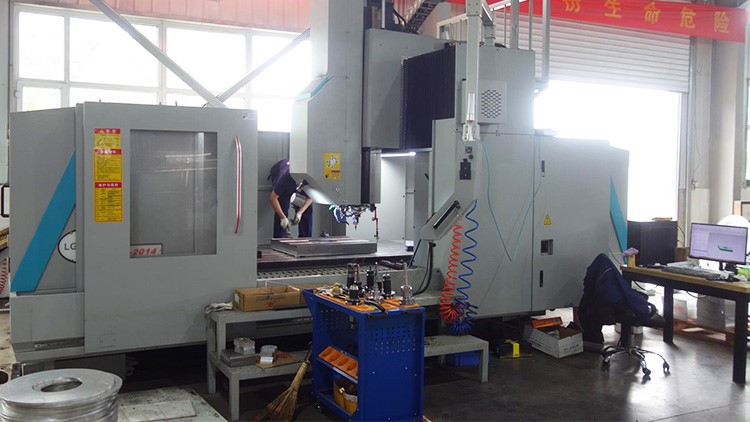
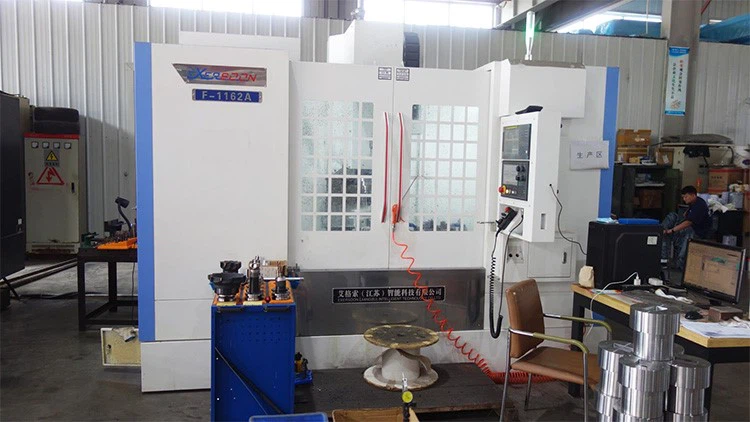
Dexing Magnet is located in the city of Xiamen, China which is a beautiful peninsula and an international seaport, with the factory in Jiangsu, Zhejiang China, was founded in 1985, the former identity is one military factory, researching and developing communication parts, this facility was later acquired by the Dexing Group in 1995.

FAQ
As one of the leading cryostat manufacturers and suppliers in China, we warmly welcome you to buy customized cryostat from our factory. All equipment are with high quality and competitive price.
Digital Flux Meter, MOKE Measurement System, Hall Effect Measurement System