



Helmholtz Coils
Xiamen Dexing Magnet Tech. Co., Ltd.
Dexing Magnet is a large enterprise with excellent quality and perfect service in the international magnetometer and machinery industry.
Why Choose Us
Professional Team
It has a group of experienced technicians and managers in the magnetometer and magnetic industries.
Excellent Quality
It has introduced advanced technologies from Japan and Europe, cooperated with domestic universities and scientific research institutes, and can produce complete sets of magnetoelectric equipment.
Good service
We offer a comprehensive customization solution, tailored to meet the specific needs and requirements of our clients.
One-stop Solution
Providing technical support, troubleshooting, and maintenance services.


Helmholtz Coils is an arrangement that consists of a pair of identical circular coils placed parallel to each other and separated by a distance that is equal to the radius of each coil, generally used to produce accurately defined magnetic fields from DC to the upper end of the audio frequency range and beyond.
The coils are wired in series such that the current flowing through them is in the same direction, and they are positioned so that the axis of each coil is aligned with the axis of the other. When an electric current flows through the coils, a magnetic field is generated that is nearly uniform in the region between the coils.
The uniform magnetic field generated by Helmholtz coils can be used to simulate the effects of a magnetic field on electronic devices and systems. This is particularly useful in EMC testing, where the effects of magnetic fields on electronic devices must be evaluated.
By placing an electronic device or system inside the region of the uniform magnetic field generated by the Helmholtz coils, its susceptibility to magnetic interference can be tested. The uniformity of the magnetic field ensures that the effects of the magnetic field on the device or system are consistent throughout the region.
Magnetic field sensors such as Hall effect sensors or fluxgate magnetometers are commonly used to measure the strength and uniformity of the magnetic field generated by Helmholtz coils. These sensors can provide accurate and precise measurements of the magnetic field, which are important for many scientific and engineering applications.
Rotary motion sensors, such as encoders, can be used to measure the rotation of the coils themselves. This can be important for certain applications, such as when the coils need to be rotated to change the orientation of the magnetic field.
Linear motion sensors, such as linear potentiometers or linear encoders, can be used to measure the position of the coils along the axis of the Helmholtz coil system. This can be important for ensuring that the coils are properly aligned and that the magnetic field is uniform in the desired region.
Helmholtz coils are used in a variety of scientific, engineering, and industrial applications where a uniform magnetic field is required. Some common applications of Helmholtz coils include:
Magnetic Field Testing: Helmholtz coils are often used in laboratories to generate known and uniform magnetic fields for the testing and calibration of magnetic sensors, magnetometers, and other magnetic field measuring instruments.
EMC Testing: Helmholtz coils are commonly used in electromagnetic compatibility (EMC) testing to generate uniform magnetic fields for the testing of electronic devices and systems.
Physics Research: Helmholtz coils are used in physics research to study the behavior of charged particles and to investigate the properties of materials in magnetic fields.
Medical Applications: Helmholtz coils are used in medical applications such as magnetic resonance imaging (MRI) to generate uniform magnetic fields for the imaging of the body.
Geophysics: Helmholtz coils are used in geophysics to simulate the magnetic fields of the Earth and to study the behavior of magnetic materials in the Earth's magnetic field.
Materials Testing: Helmholtz coils are used in materials science and engineering to study the magnetic properties of materials and to test the effectiveness of magnetic materials in shielding against external magnetic fields.

A Helmholtz coil usually consists of two parallel circular coils of exactly the same radius and number of turns, which are fixed on a common axis and whose radius is equal to the distance between them. The distance between them is often referred to as the "width" of the Helmholtz coil.
When two coils are passed current in the same direction, they generate a magnetic field. This magnetic field can be described by Maxwell's equations. Since a Helmholtz coil is symmetrical, the magnetic field it produces is uniform along its axis.
When the two coils are supplied with reverse current, the superposition weakens the magnetic field, so that a region where the magnetic field is zero appears.
The choice of materials for manufacturing Helmholtz coils is crucial for achieving the desired performance and durability. Some of the key materials used in the manufacturing of Helmholtz coils include:
Copper wire: Copper is a common choice for the coil windings due to its high electrical conductivity and thermal stability.
Non-magnetic materials: To minimize interference with the magnetic field, non-magnetic materials such as aluminum or stainless steel are often used for the coil formers and supporting structures.
Insulating materials: Insulation is necessary to prevent short circuits and reduce energy losses. Materials like enamel or polyimide tape are commonly used to insulate the coil windings.
Ferromagnetic cores: In some cases, ferromagnetic cores made of materials like iron or ferrite may be used to enhance the magnetic field strength and focus.
Wood may be an unconventional but viable option for the manufacturing of Helmholtz coils. While not commonly used in coil manufacturing, wood can offer unique advantages such as its insulating properties and ability to dampen vibrations. Additionally, wood can be easily shaped and customized to meet specific design requirements, making it a versatile material choice for coil formers and supporting structures.
The selection of appropriate materials depends on factors such as the required magnetic field strength, operating conditions, and cost considerations.
Magnetic fields are invisible, so there is no way to tell if a magnet is good or bad just by looking at it. There are a variety of tools for testing available, but one of the simplest and most popular is a Helmholtz coil. Connected to a fluxmeter, you can use it to measure the magnetic moment or dipole moment of permanent magnets.
How it works
A Helmholtz coil captures the magnetic field lines from a magnet, similar to how a butterfly net is used.
Just about any wire wrapped as a coil can be used to capture and measure the fields produced by a magnet, but to maximize sensitivity and usability, a special arrangement of two works best:
This arrangement was first mathematically described by the German physicist Hermann von Helmholtz, and the coil arrangement has been named in his honor. A Helmholtz coil contains two identical magnetic coils that are placed concentric along a common axis. There is one coil on each side of the experimental area where each sample magnet is placed. The amount of magnetic field lines produced and captured by the Helmholtz coil is directly proportional to the strength of the sample magnet. Since the volume and the material are fixed properties, capturing the magnetic field lines tells one if the magnet is properly magnetized.
How to use it
For a Helmholtz coil measurement, the coil must be minimum of three times larger than the magnet. The coil is connected to a fluxmeter. The magnet is placed in the center of the coil, the fluxmeter is zeroed out, and the magnet is pulled straight out of the coil. The fluxmeter displays how many of the magnetic field lines were captured by the coil. Generally, a minimum acceptable value is calculated beforehand.
Consistency and speed
One of the many advantages of the Helmholtz coil measurement is its tolerance for variability. User A will obtain virtually the same readings as User B or User C. Once setup is complete, the measurement only takes a few seconds, lending itself to use in a high quantity production environment.

Magnetic flux, also known as magnetic flux, is the total number of magnetic field lines passing through a certain cross-sectional area, represented by Φ, and the unit is Web (Bot) Wb.
The expression of magnetic flux passing through a coil is: Φ=B*S (where B is the magnetic induction intensity and S is the area of the coil.)
The magnetic flux of a permeable magnet is much larger than that of air (vacuum); for example, a transformer is a device that couples energy by changing the magnetic flux. If the secondary of the transformer is short-circuited, the magnetic flux will be blocked and the input impedance will become smaller.
Magnetic induction intensity - the number of magnetic field lines passing through per unit area perpendicular to the direction of the magnetic field lines, also called the density of magnetic field lines, also called magnetic flux density, represented by B, and the unit is tex (Sla) T.
The magnetic flux mentioned on the market refers to a cylindrical ferrite core with a through hole, through which a wire can pass through to suppress electromagnetic interference (EMI suppression).
The magnetosphere is the Earth's distant magnetic field. It is the product of the interaction between the Earth's magnetic field and the solar wind. The outer boundary of the magnetosphere is the magnetopause, which can reach a space of 13,000 kilometers. It is the outermost ring around the earth and far exceeds the outermost limit of the earth's atmosphere. Therefore, the magnetosphere is called the super outer circle. The outermost layer of the Earth. Magnetic Circle Due to the action of the solar wind, the ideal toroidal circle no longer exists. The pressure of the solar wind compresses the magnetosphere on the side facing the sun, where the magnetic field lines are almost squeezed together and the magnetosphere becomes narrow; while on the other side facing away from the sun, the top of the magnetosphere is extended far away and the magnetic field lines are very sparse. , the magnetosphere becomes wider. Therefore, the shape of the magnetic coil is somewhat similar to the appearance of a comet.
The magnetosphere is the Earth's distant magnetic field. It is the product of the interaction between the Earth's magnetic field and the solar wind. The outer boundary of the magnetosphere is the magnetopause, which can reach a space of 13,000 kilometers. It is the outermost ring around the earth and far exceeds the outermost limit of the earth's atmosphere. Therefore, the magnetosphere is called the super outer circle. The outermost layer of the Earth. Magnetic Circle Due to the action of the solar wind, the ideal toroidal circle no longer exists.
The pressure of the solar wind compresses the magnetosphere on the side facing the sun, where the magnetic field lines are almost squeezed together and the magnetosphere becomes narrow; while on the other side facing away from the sun, the top of the magnetosphere is extended far away and the magnetic field lines are very sparse. , the magnetosphere becomes wider. Therefore, the shape of the magnetic coil is somewhat similar to the appearance of a comet. The magnetosphere plays a huge role in protecting life on the surface. It captures particles that are harmful to humans and life brought by the solar wind and confines them in the magnetosphere so that they cannot reach the ground and can only escape from the magnetotail. human beings and lives from harm.
When there is harassment at the low-frequency end, it is recommended that the cable be wound around 2 to 3 turns. When there is harassment at the high-frequency end, it cannot be wound around and a longer magnetic ring should be used.
Our Factory
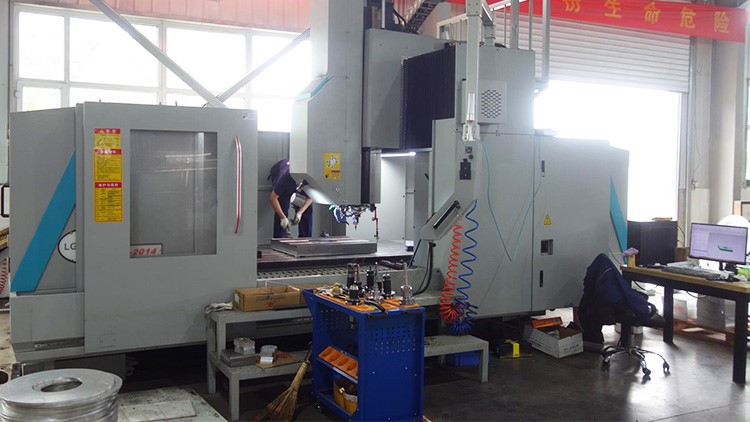
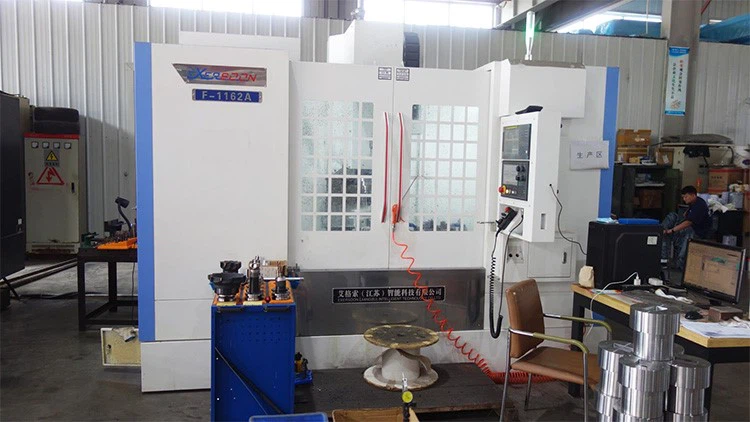
Dexing Magnet is located in the city of Xiamen, China which is a beautiful peninsula and an international seaport, with the factory in Jiangsu, Zhejiang China, was founded in 1985, the former identity is one military factory, researching and developing communication parts, this facility was later acquired by the Dexing Group in 1995.

FAQ
As one of the leading helmholtz coils manufacturers and suppliers in China, we warmly welcome you to buy customized helmholtz coils from our factory. All equipment are with high quality and competitive price.
3d Equal Diameter Coils, Multipole Electromagnet, VSM Device