



Gauss Meter
Xiamen Dexing Magnet Tech. Co., Ltd.
Dexing Magnet is a large enterprise with excellent quality and perfect service in the international magnetometer and machinery industry.
Why Choose Us
Professional Team
It has a group of experienced technicians and managers in the magnetometer and magnetic industries.
Excellent Quality
It has introduced advanced technologies from Japan and Europe, cooperated with domestic universities and scientific research institutes, and can produce complete sets of magnetoelectric equipment.
Good service
We offer a comprehensive customization solution, tailored to meet the specific needs and requirements of our clients.
One-stop Solution
Providing technical support, troubleshooting, and maintenance services.


The measurement instruments like a Gauss meter are mainly used to compute the magnetization of a magnetic material’s like a ferromagnet or otherwise it can be stated as it is used to measure the direction & strength of the magnetic field at a specific point in space. A gauss meter includes a gauss probe, the meter & a cable to fix them. This meter simply works because of the Hall Effect. This meter is also used to measure small magnetic fields.
Hall Effect is a method where a transverse electric field can be developed within a solid material when the material is located in a magnetic field that carries an electric current which is perpendicular to the magnetic field. Then the voltage can be measured at the right angle to the existing path. So this method of measuring voltage because of magnetic effect is called the Hall Effect.
Advantages of Gauss Meter
Gaussmeter is an instrument used to measure magnetic field strength, which has various characteristics and characteristics, making it suitable for various application fields. The following are some main advantages of Gaussian meters:
Accurate Measurement: Gauss meters very accurate measurements of magnetic field intensity, usually in units of Gauss (G) or Tesla (T). This precision makes it very useful in scientific research and engineering fields.
Widely Used: Gauss meters can be used in various application fields, including physics, materials science, electronic engineering, medical equipment, magnetic material testing, etc.
Magnetic Field Distribution Measurement: In addition to the overall magnetic field strength, Gaussian meters can also provide information about the distributiGauss meteron and direction of the magnetic field, which is very important for analyzing the characteristics of the magnetic field.
Non Invasive Measurement: Gauss meters are usually non-invasive and can be used to measure without disturbing or damaging the tested object, which is particularly useful in the fields of medical and material testing.
Data Recording and Analysis: Many Gauss meters have data recording and analysis functions, which can record measurement data, track the trend of magnetic field intensity changes, and conduct further analysis.
Suitable for Various Types of Magnetic Fields: Gauss meters can be used to measure different types of magnetic fields, including static magnetic fields, alternating magnetic fields, and pulse magnetic fields.

The most essential part of a gauss meter is the Hall probe. This probe is flat and measures transverse magnetic fields. Some probes are cylindrical or axial that are simply used to calculate parallel fields toward the probe. For instance; a magnetic field in a solenoid
Both types of probes can be used for measuring the magnetic fields, however transverse or flat probes are important for measuring magnetic fields within open spaces like small gaps in magnets otherwise for ferromagnetic objects or simple magnets. Generally, probes are delicate, particularly when they are used to gauge small magnetic fields & they are resistant with brass material for safety from rugged surroundings.
The gauss meter utilizes the probe to transmit a test current using the conductor and because of the Hall Effect, the voltage can be produced, which is recorded by the meter. When the voltage changes, then the meter freezes the voltage readings at a particular value and records them once the highest value of voltage is detected.
A Gaussmeter is a device used to measure the strength of a magnetic field. There are different types of Gaussmeters, but they typically operate based on the principles of electromagnetic induction or the Hall effect.
Electromagnetic Induction: Gaussmeters that use electromagnetic induction typically consist of a coil of wire connected to a measurement circuit. When a magnetic field passes through the coil, it induces a current in the wire due to Faraday's law of electromagnetic induction. The strength of the magnetic field is then determined based on the magnitude of the induced current.
Hall Effect: Gaussmeters that utilize the Hall effect contain a semiconductor material through which a current is passed. When a magnetic field is applied perpendicular to the current flow, it creates a voltage difference across the semiconductor material due to the Hall effect. The strength of the magnetic field can be calculated based on the voltage measured.
In both cases, the Gaussmeter needs to be calibrated to provide accurate measurements of the magnetic field strength. Additionally, Gaussmeters may have different ranges and sensitivities depending on the strength of the magnetic field being measured.
The difference between gauss meter and magnetometer includes the following.
Gauss Meter
A gauss meter is a measuring device, used to measure the strength/ intensity of a magnetic field to discover its direction.
This meter includes a Hall probe/gauss sensor, the meter & a connecting cable wire.
The gauss meter is a precise measuring device due to 1% of accuracy.
This meter displays the measurements of an electromagnetic wave in Gauss.
The weight of the gaussmeter is approximately1kg.
Magnetometer
A magnetometer is used to estimate a particular magnetic field value within a specified or given area.
Magnetometer includes the magnetometer housing, electrostatic shield & the assembly of a magnetometer.
These meters are extremely accurate.
Magnetometer detects EMFs (electromagnetic fields (EMFs) & simply displays measurement results within mG (milliGauss) or µT (microTesla).
The weight of the magnetometer is approximately7.7 kg with terminations.

Gauss meters are used to measure the surface magnetic field strength, air gap magnetic field strength, residual magnetic field measurement, and leakage magnetic field measurement of various permanent magnets.
Surface magnetic field measurement of permanent magnets
Gauss meter (Tesla meter) is used to measure the surface magnetic field strength of permanent magnet products, mainly to evaluate the quality of permanent magnet products and the consistency of magnetic properties after magnetization; Usually, the magnetic field strength of the center point on the surface of the magnet is measured, and the conformity of the product can be determined by comparing the standard sample data, while also ensuring the consistency of the material.
Measurement of air gap magnetic field:Gauss meter application
Gauss meter (Tesla meter) is widely used to measure air gap magnetic field, and is useful in scientific research, electronic manufacturing, machinery and other fields. The industries with typical applications mainly include motor and electroacoustic industries.
Residual magnetic measurement:
Such as testing the demagnetization effect of the workpiece after demagnetization.
Magnetic flux leakage measurement:
Such as horn magnetic flux leakage measurement.
Gauss Meter Buying Guide
Types of Gauss Meters
There are many different types of gauss meters, and depending on the measurement principle and application, it is important to choose the right type of gauss meter for your needs. The following are some of the common types of gauss meter.
● Hall Effect Gauss Meter: This type of gauss meter is based on the Hall effect and utilizes the potential difference caused by the magnetic field when a current passes through a semiconductor material to measure the magnetic field, and is typically used for low magnetic field measurements and magnetic field direction measurements.
● Magnetoresistive Gauss meter: Magnetoresistive gauss meters use magnetoresistive materials whose resistance changes in response to the magnetic field. This type of gauss meter is commonly used for high magnetic field measurements and high precision measurements.
● Bending Gauss Meter: Bending gauss Meter adopts the principle of bending the metal sheet, utilizing the change of bending degree of the metal sheet to measure the magnetic field, which is suitable for some special applications, such as medical equipment and biomedical research.
● Triaxial Gauss meter: Triaxial gauss meters have three independent sensors that can measure magnetic fields in three directions simultaneously. This is useful for applications that require omnidirectional magnetic field measurements, such as geomagnetic surveys and navigation systems.
Choosing a Gauss Meter
● Determine the Application Requirements: First, define the application requirements. Determine the range of magnetic fields to be measured, the accuracy, the frequency of measurement, and whether directional information is required. The magnetic field is divided into DC magnetic field and AC magnetic field two kinds, permanent magnetic material magnetic field strength should be selected DC gauss meter measurement. Define the approximate magnetic field range of the object to be measured, and select a gauss meter whose range should be larger than the measured magnetic field.
● Choose the Appropriate Type: Select the appropriate type of gauss meter according to the application requirements. For example, if high magnetic fields need to be measured, a magnetoresistive gauss meter may be a better choice. If triaxial measurements are required, choose a triaxial gauss meter.
● Determine the Accuracy Requirement: This refers to the resolution of the gauss meter, e.g., whether the resolution is 1G or 0.1G, etc. Determining the measurement accuracy required will help narrow down the choice. Different models of gauss meter have different accuracy levels.
● Consider the Environment: Consider the environment in which you plan to use the gauss meter. Some gauss meters are water and dust-resistant, making them suitable for use in harsh environments.
● Budget Considerations: Consider your budget range. Prices of gauss meters vary greatly depending on the model and features. Make sure you choose the right gauss meter for your budget.
● Check Product Reviews and Manufacturer Information: Check product reviews about the gauss meter to see what other users have experienced. Also, review the product specifications and technical data provided by the manufacturer for more information.
● Contact a Professional: If you are not sure how to choose the right gauss meter for your needs, it is advisable to consult a professional or supplier who can provide professional advice and guidance.
Buying a gauss meter is an important decision as it involves the crucial task of measuring magnetic fields correctly. Understanding the benefits, different types and selection methods of gauss meters will help to make an informed choice to meet the application requirements. Ensure that you fully consider your needs, budget, and the environment in which it will be used before making a purchase, and refer to expert advice to select the most suitable gauss meter. This will help ensure that accurate magnetic field measurements are obtained and research or engineering requirements are met.
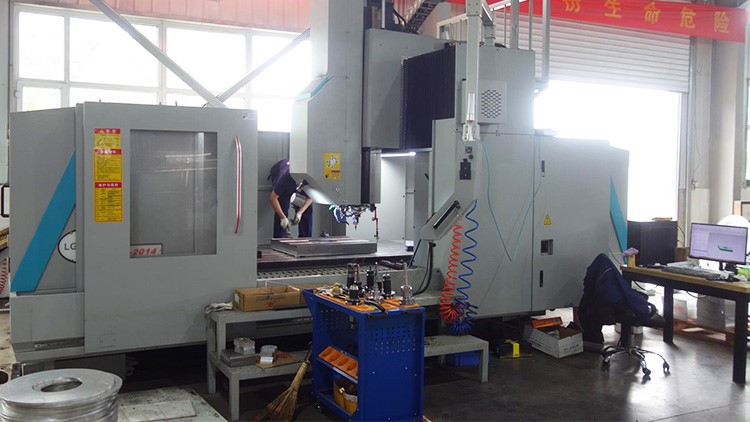
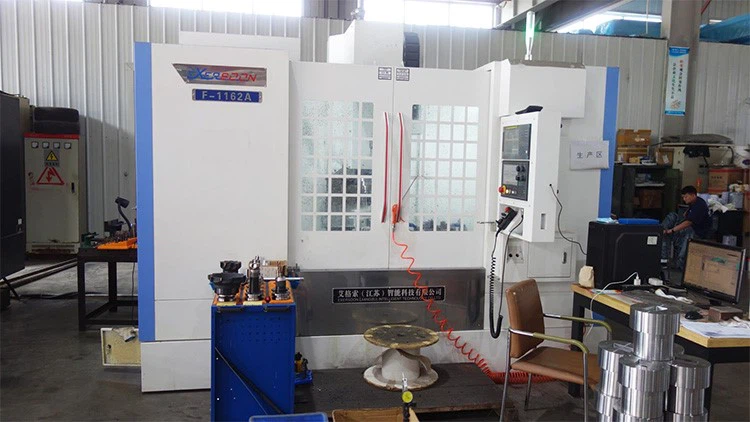
Our Factory
Dexing Magnet is located in the city of Xiamen, China which is a beautiful peninsula and an international seaport, with the factory in Jiangsu, Zhejiang China, was founded in 1985, the former identity is one military factory, researching and developing communication parts, this facility was later acquired by the Dexing Group in 1995.

FAQ
As one of the leading gauss meter manufacturers and suppliers in China, we warmly welcome you to buy customized gauss meter from our factory. All equipment are with high quality and competitive price.
Portable DC Gauss Meter, Ultra low Temperature Controller, Magnetic Flux Coil