




Xiamen Dexing Magnet Tech. Co., Ltd.
Dexing Magnet is a large enterprise that provides excellent quality and perfect service in the international magnetometer and machinery industry.
Why Choose Us
Professional Team
It has a group of experienced technicians and managers in the magnetometer and magnetic industries.
Excellent Quality
It has introduced advanced technologies from Japan and Europe, cooperated with domestic universities and scientific research institutes, and can produce complete sets of magnetoelectric equipment.
Good service
We offer a comprehensive customization solution, tailored to meet the specific needs and requirements of our clients.
One-stop Solution
Providing technical support, troubleshooting, and maintenance services.
Axial Permanent Magnets
Our Company Is Proud To Introduce The Axial Permanent Magnets. This constant magnetic field is Small, powerful, stable, and widely applicable, Concentrated axial magnetic field for precision experiments

Axial Permanent Magnets
Axial Permanent Magnet fields stretch across the width of a rotary magnetic separator. When magnetically susceptible material enters the field, it is attracted to the point of highest magnetic intensity-known as the pole-but then the motion of the conveyor or drum drags the material through a weaker area of the field located between the two poles before it eventually settles onto another pole.
An axial magnetic field is ideal when the magnetic separator may have captured a high level of entrapped non-magnetic material. Because of the movement between the poles, non-magnetic material will be released as the magnetic item "tumbles" in the field. The downside of this type of magnetic field is that there is the potential for reduced separation performance.
An axial magnetic field is best for applications where the separation objective is to maximize the purity of the recovered ferrous metal. An example of an application that may prioritize the purity of recovered material is an auto-recycling application, where the purity of ferrous material recovered is essential in determining its resale value. This is because the "tumbling" effect can release entrapped non-magnetic material. However, this means that recovery rates of ferrous metals may be slightly lower.
Typically, magnetic separators using an axial field recover ferrous metal from recycling operations. Bunting products that utilize axial magnetic fields include permanent drum magnets, electro-drum magnets, and pulley magnets.
Axial magnetic fields stretch across the width of a rotary magnetic separator. When magnetically susceptible material enters the field, it is attracted to the point of highest magnetic intensity - known as the pole - but then, the motion of the conveyor or drum drags the material through a weaker area of field located between the two poles before it eventually settles onto another pole.
An axial magnetic field is ideal when the magnetic separator may have captured a high-entrapped non-magnetic material. Because of the movement between the poles, the non-magnetic material will be released as the magnetic item "tumbles" in the field. The downside of this type of magnetic field is that it has the potential for reduced separation performance.
An axial magnetic field is best for applications where the separation objective is to maximize the purity of the recovered ferrous metal. An example of an application that may prioritize the purity of recovered material is an auto-recycling application, where the purity of ferrous material recovered is essential in determining its resale value. This is because the "tumbling" effect can release entrapped non-magnetic material. However, this means that recovery rates of ferrous metals may be slightly lower.
Typically, magnetic separators using an axial field recover ferrous metal from recycling operations. Bunting products that utilize axial magnetic fields include permanent drum magnets, electro-drum magnets, and pulley magnets.
Radial Magnetic Field
In a radial magnetic field, poles run in the same direction that the conveyor or drum is rotating and follow the flow of the material. Magnetically susceptible material will be attracted to the poles, the highest points of magnetic intensity, and held there until it is dragged out of the magnetic field.
A radial magnetic field is ideal when the goal is to maximize the amount of magnetic metal being separated from the material. An example of an application that may seek to separate the maximum amount of magnetic metal is a mineral application where ferrous tramp metal must be removed from the product stream to not contaminate the product. The downside of a radial magnetic field is that it is possible for the entrapment of non-magnetics to occur, which then reduces the purity level of the recovered metal that is ultimately separated out.
Magnetic separators with radial magnetic field designs are typically found in mineral processing applications, such as recovering magnetic minerals, and in certain recycling applications, such as removing ferrous metals.
Bunting products utilizing radial magnetic field design include drum magnets, pulley magnets, rare earth roll separators, and induced magnetic roll separators.
Selection Criteria
When you are deciding the type of magnetic field to use in a specific application, it is important to consider key factors, including:
• Capacities that commonly determine burden depths.
• Separation objective: Should you prioritize the recovery or removal of ferrous materials as your main separation goal?
• If you prioritize recovery, consider your purity target for the metal you are recovering.
• If you prioritize removal, consider the separation target of the ferrous component.
• What is the particle size of the ferrous and non-metallic metals you are handling?
What Is the Magnetization Direction For Permanent Magnets?
Magnetization direction is used to describe the direction of a magnetic pole in the magnet. The magnetization direction is determined before the magnet is magnetized. It is not left to chance because it determines how the magnet is applied. To understand how a particular magnet is best applied, it is essential to study its magnetization direction. Permanent magnets are magnets that, once magnetized, always retain their magnetism. Permanent magnets create their magnetic field. They do not depend on external sources such as electricity to generate their magnetic field. Hence, they are constantly magnetized. Permanent magnets are usually made from ferromagnetic material. These materials are heated at extremely high temperatures. This makes the material's magnetic areas align in the same direction as the external magnetic field. After heating, the material can cool, and the aligned magnetic areas remain fixed.
Anisotropic Magnets
Anisotropic magnets are magnets whose magnetic properties are tightly tied to their magnetization direction. In essence, they have varying levels of magnetism in different magnetization directions. When magnetized, they are aligned in their future magnetization direction. These magnets have a preferred magnetization direction. Outside this direction, they cannot be magnetized. An advantage of this magnet type is that it is stronger than isotropic magnets.
Isotropic Magnets
Isotropic magnets do not have their magnetic properties tightly tied to their magnetization direction. They have no preferred magnetization direction, and magnetization can occur in any direction. The magnetic force of isotropic magnets is usually in the direction of magnetization. During manufacture, isotropic magnets are not oriented in any direction. They usually have less magnetic strength than anisotropic magnets. However, they are less expensive than anisotropic magnets.
Magnetization Direction for Permanent Magnets
There are three major magnetization directions for permanent magnets.
Three major Tmagnetization directions for permanent magnets
Axial Magnetization Direction
Axial magnetization is directed along the length of the magnet. In axial magnetization, the magnet is magnetized along an axis. It is the most popular type of magnetization. If a cylindrical magnet has an axial magnetization direction, it implies that the magnetic poles will be located on the flat surface of the magnet. This means a magnet magnetized in this direction will be more efficient when the flat surface is near the material you want to attract.
Diametrical Magnetization Direction
In contrast to axial magnetization direction, diametric magnetization direction occurs along the breadth or diameter of the magnet. In diametrical magnetization, the poles are on the curved side of the magnet if the magnet is cylindrical. This means the magnet will be more efficient if the curved side is near the material you want to attract.
Radial Magnetization Direction
Radial magnetization directs magnetization along the outer and inner diameters of the magnet. It is usually used for ring-shaped magnets.
Magnetization Direction Testing
Ever wonder about a magnet's magnetization direction? This simple test can help you determine it. When you place a ferromagnetic material close to a magnet and feel a strong pull at its flat end, it is axially magnetized. If, however, the pull is stronger at the sides of the magnet, then the magnet is diametrically magnetized.
Types of Permanent Magnets and their Applications
From hard drives to televisions and transducers. Permanent magnets have many applications and types. The various types of permanent magnets can have any of the magnetization directions of permanent magnets described above.
Alnico
Alnico magnets are composed of aluminum, nickel, and cobalt, and may also include small quantities of copper and iron. These permanent magnets are usually highly resistant to corrosion and have high mechanical strength. They are most often anisotropic and are used for microphones, electric motors, and sensors.
Ferrite
Ferrite magnets can be isotropic or anisotropic. They are made of compounds such as strontium oxide and iron trioxide. Occasionally, elements like cobalt and lanthanum are thrown into the mix. These magnets are often used in loudspeakers, medical instruments, and security systems.
Samarium Cobalt
Samarium Cobalt magnets are permanent magnets with a strong magnetic field. They are rare-earth magnets and are resistant to extreme changes in temperature. These magnets are most often anisotropic. They are usually used for generators, electric motors, and medical devices.
Neodymium Iron Boron
Neodymium Iron Boron Magnets have a preferred magnetic direction. They usually exhibit anisotropy. They can be magnetized axially, diametrically, or radially. Neodymium Iron Boron magnets are usually used in MRI scanners, dental instruments, jewelry, and medical devices.

How To Generate a Constant Magnetic Force
A constant magnetic force across the whole working volume is key to consistency in biomagnetic separation processes. This ensures that all beads in the suspension experience the same force. Classical magnetic separators can't provide these conditions because the magnetic force they generate decreases with distance.
The generic magnetic force expression is the gradient of the scalar product of the magnetic moment of the bead and the magnetic field. For magnetic beads, if their magnetic moment aligns with the applied magnetic field, then both vectors are parallel. This allows magnetic force to be expressed differently when the magnetic field is low or high.
When the magnetic field is low
Magnetic susceptibility is the ratio between magnetization and the applied magnetic field. When magnetic susceptibility is constant, the magnetic force will be proportional to the gradient of the square of the applied field. This is why magnetic force is expressed as T2/m in some of the literature. The authors implicitly assume that the magnetic beads are not saturated.
To get a constant magnetic force in these conditions, you need to have a magnetic field with an intensity that varies with the square root of the distance. This kind of magnetic field profile is complex (if not impossible) to generate.
When the magnetic field is high
When the beads are magnetically saturated, the magnetic response is no longer linear as the magnetic field increases. For even higher magnetic field values, the magnetic moment of the beads remains close to its saturation value. If we can assume the magnetic moment is constant, then the magnetic force is directly proportional to the magnetic field gradient.
The following two conditions must be met to maintain a constant magnetic force in biomagnetic separation processes:
The magnetic field must vary linearly with the distance of the beads from the magnet.
The beads should be magnetically saturated so the field is high enough (e.g., B < 0.1 T for magnetite).
Newer, more advanced constant magnetic biomagnetic separation systems such as Sepmag fulfill these two conditions at virtually any volume. This is possible because these systems have a constant radial magnetic field in the core. In these systems, the gradient is adjusted so that the magnetic field is over 0.1 T everywhere except in a small area around the axis. All beads, therefore, experience the same force and move at the same radial speed.
As such, for advanced biomagnetic separation systems, the force is constant and well-defined so scaling up is typically straightforward. To successfully scale up your biomagnetic separation processes, you need to carefully consider the exact conditions of your system (e.g., variation of the magnetic field, characteristics of the beads, and characteristics of the magnetic field). When scaling up your process, you must scale up the magnetic force, not the magnetic field.

Our Factory
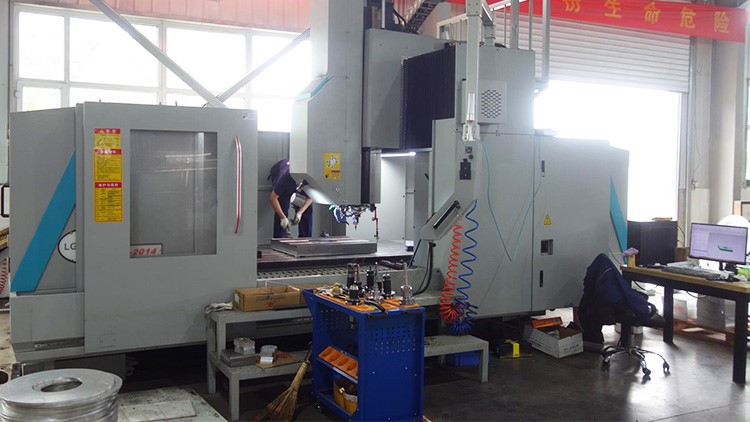
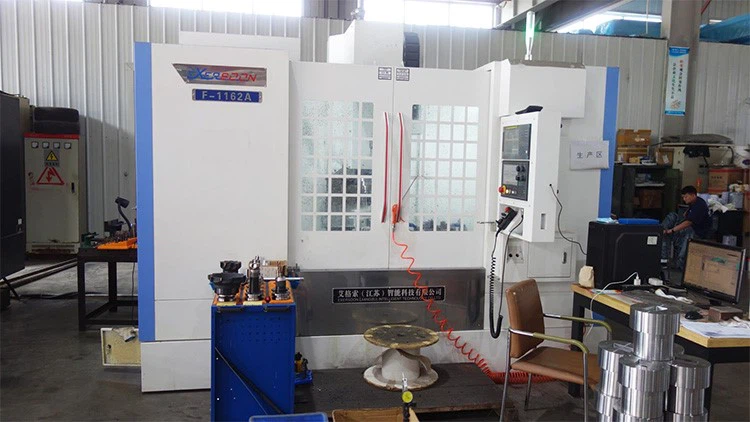
Dexing Magnet is located in the city of Xiamen, China which is a beautiful peninsula and an international seaport, with the factory in Jiangsu, Zhejiang China, was founded in 1985, the former identity is one military factory, researching and developing communication parts, this facility was later acquired by the Dexing Group in 1995.

FAQ