




Xiamen Dexing Magnet Tech. Co., Ltd.
Dexing Magnet is a large enterprise with excellent quality and perfect service in the international magnetometer and machinery industry.
Why Choose Us
Professional Team
It has a group of experienced technicians and managers in the magnetometer and magnetic industries.
Excellent Quality
It has introduced advanced technologies from Japan and Europe, cooperated with domestic universities and scientific research institutes, and can produce complete sets of magnetoelectric equipment.
Good service
We offer a comprehensive customization solution, tailored to meet the specific needs and requirements of our clients.
One-stop Solution
Providing technical support, troubleshooting, and maintenance services.

Our company is proud to offer a wide range of Hall effect sensors that cater to various industries and applications. With our extensive experience and expertise in the area, we strive to provide high-quality products that exceed our customers' expectations.
A Hall probe is a device that uses a calibrated Hall effect sensor to directly measure the strength of a magnetic field. Since magnetic fields have a direction as well as a magnitude, the results from a Hall probe are dependent on the orientation, as well as the position, of the probe.
What is Better, A Hall Probe Or a Magnetometer?
Both hall probes and magnetometers are instruments used to measure magnetic fields, but they serve slightly different purposes and have different characteristics that make them better suited for specific applications. Here's a comparison of the two:
Hall Probe:
● A Hall probe is a type of sensor that can be used to measure magnetic fields. It operates based on the Hall effect, which is the production of a voltage difference across an electrical conductor when a magnetic field is applied perpendicular to the current flowing in the conductor.
● Hall probes are typically small, lightweight, and very sensitive to magnetic fields. They are often used for precise measurements of magnetic fields in research, industry, and engineering applications.
● Hall probes are suitable for measuring both static and dynamic magnetic fields. They can provide accurate measurements of magnetic field strength and direction.
● Hall probes are generally more expensive and delicate compared to other types of magnetometers.
Magnetometer:
● A magnetometer is a more general term used to refer to any instrument that measures magnetic fields. There are different types of magnetometers, including fluxgate magnetometers, proton precession magnetometers, and magneto-resistive magnetometers.
● Magnetometers are typically more versatile and can be used for a wider range of applications compared to Hall probes. They can be more robust and suitable for fieldwork or outdoor use.
● Magnetometers can vary in sensitivity and accuracy depending on the type and quality of the instrument. Some magnetometers may not be as sensitive as Hall probes but can still provide useful measurements for many applications.
● Magnetometers are commonly used in geophysics, archaeology, navigation, and other fields where measuring magnetic fields is important.
The choice between a Hall probe and a magnetometer depends on the specific requirements of the application. If you need high sensitivity and precision for measuring magnetic fields in a controlled environment, a Hall probe may be the better choice. If you need a more versatile instrument that can be used in various settings and applications, a magnetometer may be more suitable.
Magnet Field Measurement Using Hall Probes
A Hall probe is an enhanced Hall effect sensor integrated with instrumentation electronics. These components are designed to collaboratively amplify, filter, and convert the sensor's output into a digital signal, thereby enabling precise measurements of magnetic flux density. The output corresponds directly with the magnetic field intensity.
What is a B Field?
The B field, often referred to as the magnetic field, is characterized as a vector field. In layman's terms, this indicates that it possesses direction and magnitude, and at any particular point, it can be separated into three components that are mutually perpendicular. Visualizing this can be quite intuitive: think of magnetic field lines emerging from a magnet's north pole and concluding at its south pole. This alignment showcases the direction of the B field.
A fascinating example of the B field in action is a compass. It always points toward Earth's geographic North because it aligns with the magnetic field. Intriguingly, this means that the Earth's magnetic North is actually a south magnetic pole, as it attracts the compass's north pole, revealing a counterintuitive aspect of Earth's magnetic orientation.
Orientation and Mounting Considerations
A Hall probe's configuration and positioning in a magnetic field are crucial to its optimal functioning. Primarily, the Hall element, being a 2-dimensional structure, is highly sensitive and delivers the most accurate readings when arranged perpendicular to the B field direction. The orientation matters; for instance, in a specific arrangement, the probe reads a positive field. Flip the orientation, and you get a negative field reading.
For precise measurements, it's essential that the probe's sensitive area is well within the magnetic field you're examining. Be mindful of potential fringe field curvature, which could influence your readings.
Moreover, if your field comprises substantial AC components, the probe's mounting structure must be non-conductive. This precaution helps prevent inaccuracies in your measurements due to eddy currents. This way, you ensure the integrity of your data and the efficacy of your Hall probe.
B Fields with Positive Ions
Pyramid Hall probes often measure electromagnets in beamlines. Consider an electromagnet creating a field that deflects a positive ion beam. In this scenario, a positive reading from the Hall probe directly aligns with the current flow direction within the electromagnets. Hence, the Hall probe readings provide an accurate indication of ion beam behavior in these systems, enhancing beamline management and performance.
To illustrate, consider an electromagnet generating a field that deflects a positive ion beam. This scenario is depicted in the accompanying figure for your reference. With the illustrated orientation, a positive reading from the Hall probe indicates deflection in the same direction as the current flow within the electromagnets.
Overcoming Repeatability Challenges
Hall probes, while excellent tools for measuring magnetic fields, can be susceptible to drift due to temperature fluctuations and radiation exposure. Temperature drift can affect the accuracy of readings by causing shifts in the output signal, thereby resulting in measurements that aren't true reflections of the magnetic field intensity. Similarly, radiation exposure can lead to cumulative damage at the semiconductor level, affecting the probe's performance and longevity over time.
To mitigate these issues, certain strategies are employed. Integrated temperature sensors, for example, allow for real-time compensation of temperature drift. These sensors constantly monitor temperature changes and dynamically correct the output of the Hall probe, ensuring the accuracy of magnetic field measurements regardless of environmental conditions. Additionally, the use of radiation-hard semiconductors in the construction of the Hall probe significantly enhances its radiation tolerance. This means that the probe can maintain its accuracy and performance even in high-radiation environments, making it an invaluable tool in applications such as particle accelerators and beamlines.
HP1 Hall Probe & T1 Gaussmeter
The HP1 Hall probe and T1 control unit, designed with unique features, form an ideal combination for precise magnetic field measurements. HP1 is a radiation-resistant sensor, specifically tailored for accelerator applications, and boasts a wide detection range of 0.1 Gauss to 2.8k Gauss (or 2.8 Tesla). With its built-in temperature sensor, real-time dynamic correction is possible, further enhanced by a high-precision gain amplifier for improved accuracy. Moreover, the sensor's customizable 3D-printed housing ensures compatibility with any magnet configuration.
The T1 control unit complements the HP1 by offering measurements from 0 to 2.8 Tesla in a fully bipolar manner, along with excellent noise characteristics. It operates with data rates from 25kHz to 10Hz and interfaces seamlessly via JSON HTTP, WebSockets, or EPICS API. The control unit provides a +/-10 Volt calibrated BNC monitor output and, like the HP1, allows dynamic temperature correction and user zeroing through a GUI or programmable API. This combination ensures precise, reliable, and user-friendly magnetic field measurements.
When we talk about the Hall effect probe, we first need to clarify some terms. If a magnetic field forms around an electric field, the field lines of these two fields will condense if they extend in the same direction. If, on the contrary, these field lines work in the opposite direction, they will weaken. The force reached at this stage is the Lorentz force.
If this force acts directly on the electrons of a conductor, which carries current, connected with a printed circuit board, we generate what is called the load offset. This means that there is a shortage on one side and an excess of electrons on the other. This combination ultimately creates an electric field called Hall effect.
We now come to the Hall effect probe for gaussmeter. The combination of printed circuit boards, control circuit and magnetic field is called the Hall generator. If the integrated circuit remains constant here, we are talking about the Hall probe, with which the magnetic fields can be measured. The intensity of these magnetic fields is generally measured in amperes per meter or in Tesla. There is also the Oersted unit of measure, but it is no longer used. However, the most common way to look at magnetic flux density these days is Tesla, which can also be measured with the Hall effect sensor.
The electrons are pushed vertically out of their original direction of movement by the conductive plate, so that they are also located on one side of the plate. The resulting electric voltage is proportional to the magnetic field, the strength of which we still do not know. If we now use the Hall voltage across the conductor, we can calculate the electric forces which are equal to the Lorentz force and therefore the force of the magnetic field.
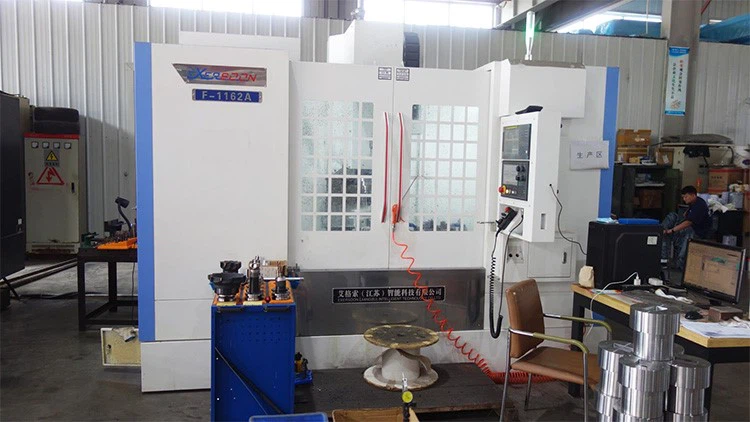
Our Factory
Dexing Magnet is located in the city of Xiamen, China which is a beautiful peninsula and an international seaport, with the factory in Jiangsu, Zhejiang China, was founded in 1985, the former identity is one military factory, researching and developing communication parts, this facility was later acquired by the Dexing Group in 1995.


FAQ