



Xiamen Dexing Magnet Tech. Co., Ltd.
Dexing Magnet is a large enterprise with excellent quality and perfect service in the international magnetometer and machinery industry.
Why Choose Us
Professional Team
It has a group of experienced technicians and managers in the magnetometer and magnetic industries.
Excellent Quality
It has introduced advanced technologies from Japan and Europe, cooperated with domestic universities and scientific research institutes, and can produce complete sets of magnetoelectric equipment.
Good service
We offer a comprehensive customization solution, tailored to meet the specific needs and requirements of our clients.
One-stop Solution
Providing technical support, troubleshooting, and maintenance services.

1.Dexinmag magnetometers for accurate weak magnetic field measurement.
2.High stability, linearity, and accuracy of fluxgate instruments.
3.Wide application in scientific research, military, and aerospace.
The fluxgate magnetometer is a magnetic field sensor for vector magnetic field. Its normal range is suitable for measuring earth's field and it is capable of resolving well below one 10,000th of that.
It has traditionally been used for navigation and compass work as well as metal detection and prospecting. Not difficult to construct it is often forgotten in today's world of silicon and MEMS devices.
Fluxgate magnetometer designs fall into broadly two styles, those employing rod cores and those using ring cores. Whilst there are many alternative designs mostly based on rod cores none have reached the state of development and performance attributed to two styles. For this reason this page is intended to apply only to the twin rod and ring core fluxgate variants.
All fluxgates use a highly permeable core which serves to concentrate the magnetic field to be measured. The core is magnetically saturated alternatively in opposing directions along any suitable axis, normally by means of an excitation coil driven by a sine or square waveform.
Prior to saturation the ambient field is channelled through the core producing a high flux due to its high permeability. At the point of saturation the core permeability falls away to that of vacuum causing the flux to collapse. During the next half cycle of the excitation waveform the core recovers from saturation and the flux due to the ambient field is once again at a high level until the core saturates in the opposite direction; the cycle then repeats. Despite the magnetisation reversals due to the excitation, the flux from the ambient field operates in the same direction throughout. A sense coil placed around the core will pick up these flux changes the sign of the induced voltage indicating flux collapse or recovery. The name fluxgate clearly derives from the action of the core gating flux in and out of the sense coil.
This process is shown in the figure on the left as idealised waveforms, and it can clearly be seen that the sense voltage is twice the frequency of the excitation.
Demodulation schemes often employ 2nd harmonic detection for this reason. In practice for a single rod shaped core the sense coil will pick up the excitation drive as well as the signal voltage which due to its high level can prove troublesome to remove electronically.
A common solution for this is to use two parallel cores with the excitation phase reversed from one to the other. The sense coil picks up the signal but the induced excitation voltage is cancelled by the phase reversal, producing waveforms similar to those shown here.
As described, the voltage of the flux change peaks is from Faraday's law proportional to the magnetic field; a simple sensor can be used in this way. However a superior design will employ a coil (the sense coil often doubles up for this task) to feedback a magnetic field in opposition to the sensed field such that the two fields cancel one another. In this mode of operation, where the fluxgate is used as a null detector, the current in the feedback coil is proportional to the sensed field. The technique improves linearity of measurement, allows a much greater dynamic range to be achieved and is used by the majority of modern
devices.
Advantages of Flux-Gate Magnetometers
Renowned for their unmatched precision in measuring magnetic fields, especially in the low to moderate magnetic field strength ranges, flux-gate magnetometers offer an array of advantages that cement their superiority over alternative magnetometer types:
High Sensitivity
Flux-gate magnetometers, characterized by their exceptional sensitivity, exhibit the capability to detect even the faintest of magnetic fields. This heightened sensitivity renders them invaluable in geophysical surveys, space exploration endeavors, and pioneering biomedical research.
Low Noise
The ability of flux-gate magnetometers to attain low noise levels empowers them to discern subtle magnetic field alterations with a remarkable degree of accuracy. This trait proves indispensable in applications necessitating precise measurements, such as magnetic anomaly detection or archaeological investigations.
Wide Dynamic Range
Distinguishing themselves through an extensive dynamic range, flux-gate magnetometers stand ready to measure magnetic fields spanning a broad spectrum of intensities. This versatility positions them favorably in contexts ranging from Earth's magnetic field detection to the comprehensive exploration of magnetic anomalies within the cosmos.
Frequency Response
Characterized by a relatively uniform frequency response, flux-gate magnetometers accurately capture both static and dynamic magnetic fields. This feature assumes critical significance in situations entailing swiftly changing magnetic fields, as observed in magnetic navigation systems.
Linearity
The commendable linearity demonstrated by flux-gate magnetometers establishes a direct correlation between magnetic field strength and the resulting output, engendering a foundation for effortless calibration and precise data interpretation.
Types of Flux-Gate Magnetometers

Within the realm of flux-gate magnetometers, two principal variants emerge: the single-axis and the three-axis magnetometers.
Single-Axis Flux-Gate Magnetometer
This particular variant dedicates its measurements to a single axis, a configuration aptly suited for scenarios where the magnetic field of interest predominantly assumes a one-dimensional character.
Applications of 1-Axis Magnetometers
● Compasses and Navigation: The venerable application of 1-axis magnetometers in compasses and navigation systems remains paramount. They serve as the guiding light, determining orientation with respect to Earth's magnetic field, thereby facilitating navigation and affording direction insights.
● Directional Measurements: In the domain of engineering and industrial applications, one-axis magnetometers prove invaluable in gauging magnetic field orientation or direction. This proves pivotal in alignment tasks, position sensing, and direction-centric measurements.
● Magnetic Anomaly Detection: The deployment of one-axis magnetometers in magnetic anomaly detection systems aids in the identification of magnetic field deviations attributable to buried artifacts, mineral deposits, or archaeological relics.
● Magnetometry in Research: Researchers harness the capabilities of 1-axis magnetometers to scrutinize specific magnetic phenomena, delving into the magnetic properties of materials or dissecting magnetic field variations in particular environments.
● Monitoring and Environmental Studies: In the realm of environmental studies, one-axis magnetometers shine a spotlight on fluctuations in Earth's magnetic field. These insights unveil geological activities and latent hazards, painting an enriched portrait of our surroundings.
● Magnetic Field Mapping: For certain applications, such as profiling the magnetic characteristics of objects or materials, 1-axis magnetometers come to the fore, crafting meticulous magnetic field maps.
Three-Axis Flux-Gate Magnetometer
The three-axis variant, as its moniker suggests, goes beyond by measuring magnetic field strength across all three orthogonal axes: X, Y, and Z. This comprehensive approach bestows these magnetometers with unmatched versatility, earmarking them for scientific research, geophysical surveys, and navigation systems.
Applications of 3-Axis Magnetometers
● Geophysics and Earth Sciences: Enlisted extensively within geophysical surveys, three-axis magnetometers chart and dissect the Earth's magnetic field variations. This prowess proves invaluable in identifying subsurface geological formations, mineral deposits, and the remnants of antiquity.
● Space Exploration: In the domain of space missions, three-axis magnetometers embark on a pivotal role, unveiling the intricacies of planetary magnetic fields. Their deployment facilitates the cartography of magnetic landscapes spanning planets, moons, asteroids, and an assortment of celestial entities.
● Navigation and Orientation: Intimately integrated into navigation systems and inertial guidance setups, three-axis magnetometers ascertain object orientation and positioning. Their utility permeates vehicle navigation, orientation control, and stabilization endeavors.
● Magnetic Anomaly Detection: Elevating their significance in military and defense contexts, three-axis magnetometers partake in magnetic anomaly detection missions, unearthing submarines and deciphering other enigmatic magnetic deviations.
● Magnetic Field Monitoring: Unwavering in the face of evolving environmental dynamics, three-axis magnetometers monitor magnetic fields with diligence. This capacity proves invaluable in detecting Earth's magnetic field shifts and gauging potential geomagnetic perturbations.
● Research and Scientific Studies: The prowess of three-axis magnetometers finds resonance in diverse scientific studies, elucidating space weather intricacies, unraveling magnetic field-material interactions, and unfurling the mysterious behavior of Earth's magnetic embrace.
● Unmanned Aerial Vehicles (UAVs) and Robotics: The integration of three-axis magnetometers into UAVs and robotic frameworks fosters orientation and navigation precision. They extend their invaluable aid to autonomous flight and meticulous positioning.
● Mineral Exploration and Mining: Amidst mineral exploration endeavors, three-axis magnetometers shine a light on areas imbued with pronounced magnetic susceptibility, often an indicator of valuable mineral deposits.
● Environmental Studies: As sentinels of environmental shifts, three-axis magnetometers embark on journeys to monitor and scrutinize magnetic field changes engendered by geological activity or shifts in magnetic materials.
Magnetometers are devices used for measuring magnetic fields. The main purpose of a magnetometer is to detect magnetic variations accurately, and their output is used in – among other things – navigation, object detection, and positional tracking. There are several types of magnetometers available today, including Fluxgate, optically pumped, superconducting quantum interference device (SQUID), Hall effect sensors, Magneto-Resistive sensors, Lorentz Force, and Magneto-inductive sensors.
Fluxgate Magnetometers: The fluxgate technology uses magnetic materials that experience hysteresis, allowing them to easily measure even the slightest changes in magnetic fields. While offering good sensitivity, fluxgate magnetometers tend to be bulky and consume considerable power, limiting their applicability in compact devices.
Optically Pumped Magnetometers: These magnetometers utilize an atomic vapor cell and lasers to measure magnetic fields. Optically pumped magnetometers are known for their high sensitivity and accuracy, making them suitable for scientific research. However, their complex design and relatively high costs restrict their widespread adoption for commercial applications.
SQUID Magnetometers: SQUID magnetometers are renowned for their extreme sensitivity. These sensors utilize superconducting materials and measure the changes in magnetic fields by detecting quantum interference in the superconducting circuits. However, their reliance on cryogenic temperatures and the need for careful handling make them very difficult to employ in most applications.
Hall Effect Magnetometers: Hall effect sensors detect the strength of a magnetic field using the Hall effect. The generation of an electric potential difference across a conductor is known as the production of voltage. Situated perpendicular to a magnetic field. Although Hall effect magnetometers offer compact sizes and low power consumption, they provide limited sensitivity and are mainly used to detect on or off types of applications.
Magneto-Resistive (MR) Sensors: All magneto-resistive sensors work on the principle that certain magnetic materials deposited on a semiconductor substrate change their ability to resist current flow in proportion to an applied magnetic field. The main forms of magneto-resistive sensors are Anisotropic Magneto-resistive (AMR), Tunneling Magnetic-resistive (TMR), and Giant Magneto-resistive (GMR). All three of these technologies exhibit changes in conduction based upon applied magnetic field, although they achieve them in slightly different ways. All three-exhibit similar magnetic measurement capability, and the reason to choose one over the others usually revolves around issues of manufacturability for a particular supplier. AMR is by far the most common form of magneto-resistive magnetic sensor that is used.
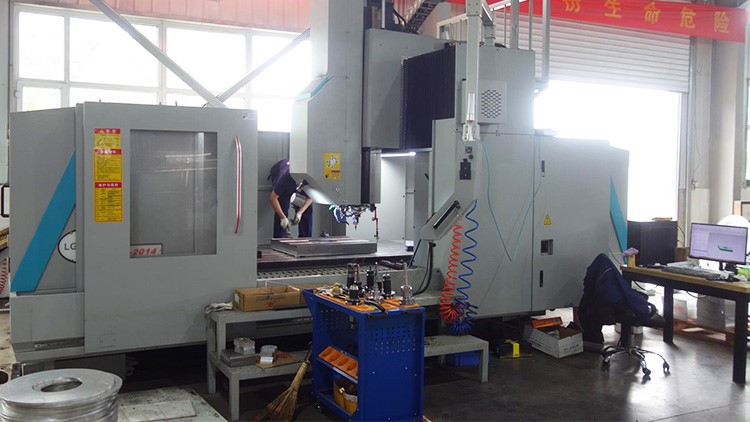
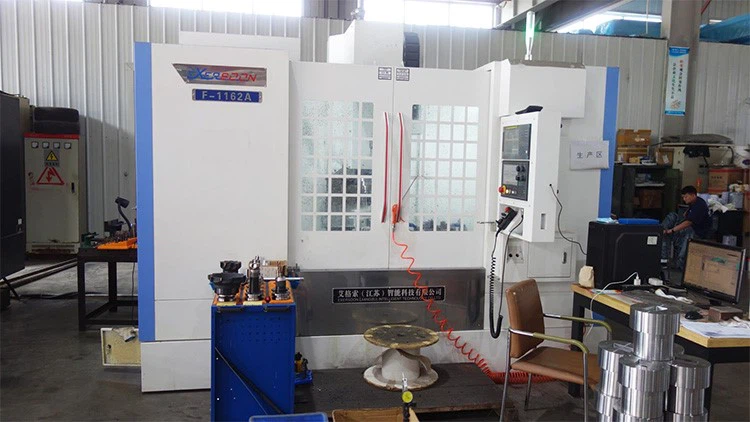
Our Factory
Dexing Magnet is located in the city of Xiamen, China which is a beautiful peninsula and an international seaport, with the factory in Jiangsu, Zhejiang China, was founded in 1985, the former identity is one military factory, researching and developing communication parts, this facility was later acquired by the Dexing Group in 1995.

FAQ