



The Green Transformation of Magnetic Materials
Table of Contents
- Introduction: How NdFeB Magnets Power the Green Revolution
- The Industry Chain: From Raw Materials to Applications
Upstream: Rare Earth Raw Material Supply
Midstream: NdFeB Magnetic Material Manufacturing
Downstream: Key Applications
3. Industry Overview and Market Size
4. Global Policy and Market Drivers
5. Competitive Landscape and Leading Manufacturers
6. Technological Innovation and Performance Breakthroughs
7. Future Trends: Toward Sustainability and Smart Manufacturing
8. FAQs
9. Partner with Xiamen Dexing Magnet Tech. Co., Ltd.
NdFeB magnetic materials-short for neodymium-iron-boron (Nd₂Fe₁₄B)-have become a cornerstone of the global green energy movement. From electric vehicles and wind turbines to robotics and smart appliances, these high-performance magnets enable greater energy efficiency, lighter systems, and stronger power density.
As global economies shift toward decarbonization, NdFeB magnetic materials play a critical role in reducing emissions, improving energy efficiency, and supporting cleaner technologies. China, with its strong rare earth supply chain and advanced manufacturing capabilities, is leading this transformation.
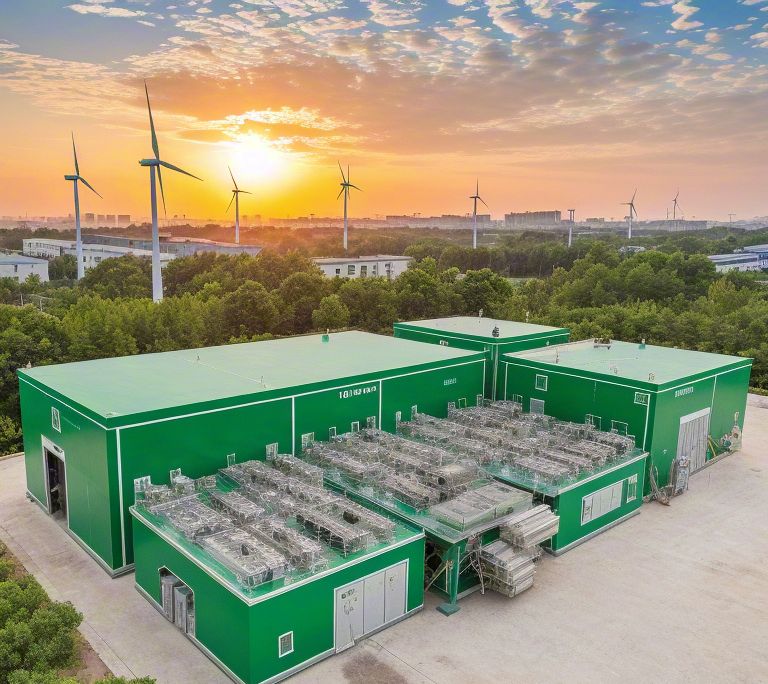
Upstream: Rare Earth Resource Supply
NdFeB magnetic materials sit in the middle segment of the rare earth supply chain. Upstream companies refine rare earth oxides, alloys, and metals such as neodymium, praseodymium, iron, and boron.
China's major suppliers include Xiamen Tungsten, China Northern Rare Earth, Ganzhou Keli, and Guangsheng Nonferrous Metals.
Key Raw Materials
| Material | Main Function | Source Example |
|---|---|---|
| Neodymium (Nd) | Provides strong magnetic properties | China, Australia |
| Praseodymium (Pr) | Enhances magnetic stability | China, USA |
| Boron (B) | Strengthens atomic bonding | Global supply |
| Iron (Fe) | Improves mechanical strength | Worldwide sources |
China's 2024 Rare Earth Management Regulation further enhances resource protection, ensuring high-quality, sustainable development of the rare earth industry.
NdFeB magnets are widely used across traditional and emerging industries:
| Application | Example Use | Representative Companies |
|---|---|---|
| Electric Vehicles (EVs) | Drive motors, sensors | Tesla, BYD, Geely |
| Energy-efficient Appliances | Inverter air conditioners, compressors | Gree, Midea |
| Wind Power | Direct-drive wind turbines | Goldwind, Vestas |
| Robotics & Automation | Industrial servos, sensors | ABB, Fanuc |
| Consumer Electronics | Speakers, vibration motors | Apple, Sony |
Each of these industries relies on NdFeB magnetic materials for compact size, high torque, and energy efficiency-making them essential in the green energy era.
According to the China Rare Earth Industry Association, China's NdFeB magnetic material output reached 250,000 tons in 2022, growing 9% year-on-year.
By 2027, production is expected to reach 410,000 tons, with a market size exceeding 66 billion RMB.
| Year | Global NdFeB Consumption (tons) | CAGR |
|---|---|---|
| 2018 | 47,500 | - |
| 2023 | 102,500 | 16.6% |
| 2028 | 227,100 | 17.2% |
This rapid expansion is driven by EVs, renewable energy, and industrial automation, which together represent over 70% of new NdFeB demand.
Several key policies are propelling the magnetic material industry forward:
- China's "Dual Carbon" Goals (Carbon Peak 2030, Carbon Neutral 2060)
Accelerates clean energy adoption and magnet recycling technologies.
- EU Green Deal & US Inflation Reduction Act
Support the localization of sustainable magnet manufacturing.
- Energy Efficiency Standards (Air Conditioners & Motors)
Boost NdFeB demand in inverter compressors and efficient industrial drives.
Together, these initiatives are pushing the global NdFeB magnetic materials market toward a greener, circular, and high-value direction.
China dominates global NdFeB production, accounting for over 85% of total output. Major players include:
| Company | 2024 Capacity (tons) | Main Market |
|---|---|---|
| Jinli Permanent Magnet | 40,000 | EVs, wind power |
| Zhong Ke San Huan | 25,000 | Electronics |
| Ningbo Yunsheng | 21,000 | EVs, motors |
| Zhenghai Magnetics | 24,000 | Automotive |
| Innuovo | 19,000 | Industrial & robotics |
These manufacturers continuously innovate with grain boundary diffusion and anti-corrosion coating technologies, enhancing both performance and longevity.
Modern NdFeB production emphasizes performance, sustainability, and efficiency.
Key breakthroughs include:
- Grain Boundary Diffusion (GBD): Improves coercivity while reducing heavy rare earth usage.
- Advanced Coatings: Extend magnet lifespan and protect against oxidation.
- Recycling Technologies: Enable closed-loop use of rare earth elements.
- Smart Manufacturing Integration: Enhances quality control and cost efficiency.
These innovations make high-performance NdFeB magnets indispensable for future-oriented industries such as renewable energy and electric mobility.
The future of NdFeB magnetic materials will revolve around:
- Sustainability: Circular recycling of rare earths and low-carbon manufacturing.
- High-end Customization: Tailored magnets for specialized industrial applications.
- Global Expansion: Chinese manufacturers increasingly collaborate with overseas ODM and distribution partners.
- Smart Automation: AI-driven production to achieve precision and efficiency.
As the world moves toward carbon neutrality, NdFeB magnets will remain at the heart of the green transformation-linking innovation with sustainability.
Q1: What makes NdFeB magnetic materials unique?
They offer the highest magnetic energy density of all permanent magnets, making them ideal for compact, high-performance systems such as EV motors and wind turbines.
Q2: Why are NdFeB magnets essential for green energy?
Because they enable higher efficiency in electric motors and renewable energy generators, reducing overall carbon emissions.
Q3: How does China lead in the NdFeB industry?
China controls most of the global rare earth supply chain, backed by advanced manufacturing and supportive national policies.
Q4: Are NdFeB magnets environmentally friendly?
Yes-especially when produced through modern recycling and low-emission processes that reduce waste and resource consumption.
Q5: How can brands or distributors partner with manufacturers?
Xiamen Dexing Magnet Tech. Co., Ltd. welcomes ODM, OEM, and wholesale partnerships worldwide to create sustainable magnetic solutions.
Looking for a reliable NdFeB magnetic material manufacturer or ODM partner?
Xiamen Dexing Magnet Tech. Co., Ltd. provides customized magnetic solutions for EVs, wind power, robotics, and industrial motors.
👉 Contact us today to discuss your project and discover how our green magnetic technologies can power your next innovation.
🌐 Visit: www.labmagnetic.com
📧 Email: sales@china-dexing.com