



Yo, folks! As a supplier of Flux Meters, I've seen firsthand how temperature can throw a real curveball at these nifty devices. So, let's dig into how temperature affects a Flux Meter, and why it's super important for you to know about it.
First off, what's a Flux Meter anyway? Well, it's a tool used to measure magnetic flux, which is basically the amount of magnetic field passing through a given area. It's like a spyglass for magnetic fields, helping us see what's going on in the invisible world of magnetism. You can check out our Digital Flux Meter and 3d Digital Flux Meter to get a better idea of what I'm talking about. We also have an Oxide Scale Tester which has its own unique applications.
Now, let's talk about temperature. Temperature isn't just about whether it's hot or cold outside; it can have a huge impact on how well a Flux Meter works.
Thermal Expansion
One of the main ways temperature affects a Flux Meter is through thermal expansion. You see, most materials expand when they get hot and contract when they cool down. This can be a big problem for the components inside a Flux Meter. For example, the coils in the meter, which are crucial for measuring magnetic flux, can change shape due to thermal expansion. If the coils expand or contract, the number of turns in the coil can effectively change, which in turn affects the sensitivity of the meter. A small change in the shape of the coil can lead to inaccurate readings, and that's a real headache for anyone relying on the Flux Meter to get precise measurements.
Electrical Conductivity Changes
Temperature also has a major effect on the electrical conductivity of the materials used in the Flux Meter. As the temperature goes up, the atoms in the conductive materials start to vibrate more vigorously. These vibrations can impede the flow of electrons, which means the electrical conductivity of the material decreases. In a Flux Meter, this can mess up the electrical signals that are used to calculate the magnetic flux. If the conductivity changes, the resistance of the circuits in the meter changes as well. And since the meter uses electrical signals to measure the magnetic field, any change in resistance can lead to incorrect readings.
Magnetic Properties
The magnetic properties of the materials in a Flux Meter can also be influenced by temperature. Some magnetic materials lose their magnetic strength as the temperature rises. This is known as the Curie temperature. When a magnetic material reaches its Curie temperature, it loses its permanent magnetism and becomes paramagnetic. In a Flux Meter, if the temperature gets too high and the magnetic materials inside reach their Curie temperature, the meter won't be able to measure the magnetic flux accurately anymore. Even if the temperature doesn't reach the Curie point, the magnetic properties can still change gradually with temperature, leading to small but significant errors in the measurements.
Calibration Issues
Another aspect to consider is calibration. Flux Meters are calibrated at a specific temperature, usually around room temperature. When the operating temperature deviates from this calibrated temperature, the meter's accuracy can be affected. For example, if you're using a Flux Meter in a very hot environment, the readings might be off because the meter was calibrated for a cooler temperature. This means that you might need to recalibrate the meter for the new temperature conditions to get accurate results. But recalibration isn't always easy or practical, especially in the field.
How We Deal with Temperature Effects
At our company, we're well aware of these temperature-related challenges, and we've taken steps to minimize their impact. We use high-quality materials that have low coefficients of thermal expansion. This means that the components in our Flux Meters are less likely to change shape due to temperature changes. We also design our meters with temperature compensation circuits. These circuits can adjust the electrical signals in the meter to account for changes in electrical conductivity and other temperature-related effects.
In addition, we provide detailed temperature specifications for all our Flux Meters. This way, you know exactly what temperature range the meter can operate in without significant loss of accuracy. If you need to use the meter in extreme temperature conditions, we can offer advice on how to best protect and operate the device.
Why It Matters to You
If you're in a field that requires accurate magnetic flux measurements, like research, manufacturing, or quality control, the temperature effects on a Flux Meter can have a big impact on your work. Inaccurate measurements can lead to faulty products, incorrect research conclusions, or wasted time and resources. By understanding how temperature affects a Flux Meter, you can take steps to ensure that you're getting the most accurate readings possible.
For instance, if you're working in a hot environment, you might want to use a cooling system to keep the Flux Meter at a stable temperature. Or, if you're in a very cold environment, you could use insulation to prevent the meter from getting too cold. And of course, always make sure to follow the temperature guidelines provided by the manufacturer.
Let's Talk Business
If you're in the market for a high-quality Flux Meter that can handle temperature variations and give you accurate results, we're here to help. Our range of Digital Flux Meter and 3d Digital Flux Meter are designed with the latest technology to minimize the effects of temperature. And our Oxide Scale Tester is a great option for specific applications.
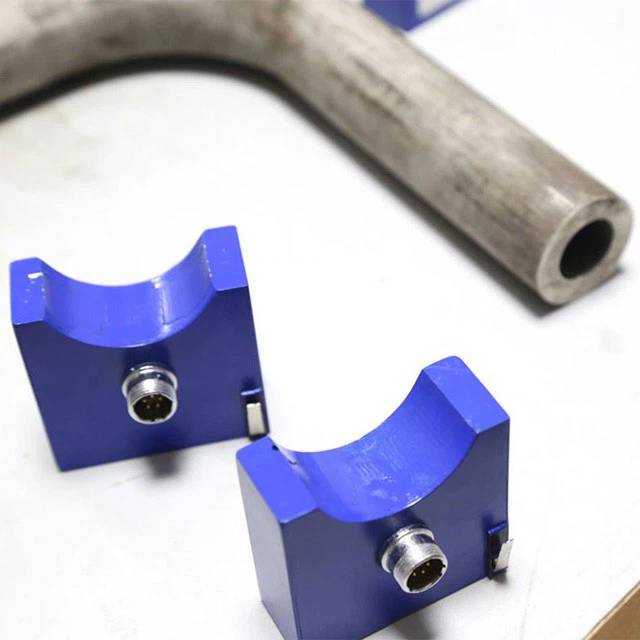

Don't let temperature throw off your magnetic flux measurements. Reach out to us today to discuss your needs and find the perfect Flux Meter for your project. We're looking forward to working with you!
References
- “Magnetic Field Measurement Techniques.” Journal of Applied Physics.
- Manufacturer's Manuals for Flux Meters.